


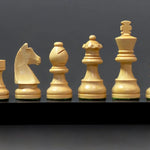
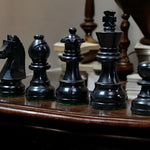
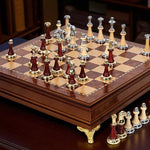
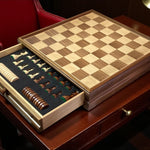



The Art of the Chess Table: Elevating Strategy to a Centrepiece of the Home
The finest hand-carved knights in the world lose their silent majesty when they are crowded onto a surface that wasn't designed to hold them. It's a common lament among connoisseurs who invest in premium boxwood and ebony sets only to find the tactile experience diminished by a lack of physical space or a table that lacks the structural integrity of a true heirloom. You likely recognise that a game of this intellectual calibre deserves a dedicated sanctuary; one where the furniture itself becomes an extension of the strategy being deployed.
In this exploration, you'll discover how a dedicated chess table elevates a casual match into a profound experience of heritage and tactical focus. We've observed that many players struggle with incorrect proportions, so we'll explain why a 55mm square is often the golden standard for professional Staunton pieces. This guide will walk you through the nuances of ergonomic heights and the specific artisan materials, such as mahogany and walnut, that ensure your station of play remains a sophisticated centrepiece of your home for generations to come.
Key Takeaways
- Understand how a dedicated station for play shifts your mental focus, elevating a simple game into a profound ritual of quiet reflection and tactical depth.
- Learn why the selection of fine timbers like Mahogany and Ebony, combined with the precision of hand-cut inlays, defines the longevity of an heirloom-quality chess table.
- Discover the specific ergonomic requirements and integrated storage solutions necessary to maintain comfort and poise during those long, tactical battles.
- Master the "Golden Ratio" of board design by applying the 75-80% rule to ensure your Staunton pieces sit in perfect visual harmony with their squares.
- Explore the meticulous standards used to vet master woodworkers, ensuring your furniture reflects the weight of Victorian heritage and the 1849 Staunton legacy.
Defining the Chess Table: More Than Just a Surface for Play
A chess table represents far more than a mere horizontal plane for competition; it is a permanent sanctuary where the rigours of the day yield to the quiet demands of strategy. For the dedicated enthusiast, this piece of furniture serves as a physical manifestation of their commitment to the Royal Game. It provides a stable, unchanging environment where one might return to a complex endgame or a particularly thorny tactical puzzle over several days without the need to clear the board for evening meals.
When we consider What is a Chess Table? in the context of a modern home, we see it as an intellectual centrepiece that anchors a room. Unlike a portable board that is tucked away in a cupboard, a permanent station invites constant engagement and reflection. It transforms a corner of a study or a drawing room into a theatre of war, preserving the integrity of a match for as long as the players require.
To better understand how these specialised pieces are constructed to meet the needs of serious players, watch this helpful video:
The Psychological Shift of a Dedicated Space
There is a subtle, yet profound, psychological transition that occurs when one moves from a cluttered dining table to a dedicated chess station. The ritual of taking a seat at a purpose-built table signals to the brain that the time for mundane concerns has ended. It allows for a state of deep immersion that is rarely achieved when playing on a surface shared with laptops or dinner plates. This leads to an interesting point regarding the "adjourned" game; leaving a position "in progress" fosters a unique form of tactical analysis, as the board remains etched in the mind, whispering for attention every time one passes the room.
Furniture vs Instrument: A Necessary Distinction
One must distinguish between a decorative "game table" and a professional-grade instrument. A standard table often possesses a slight "give" or resonance that causes triple-weighted pieces to wobble or chime unpleasantly upon contact. A bespoke chess table is engineered with a perfectly level, non-slip surface that honours the 1849 Staunton design principles. This ensures that a 4-inch King, perhaps weighted at 80 grams, sits with an authoritative thud rather than a hollow click. Such stability is vital for preserving the longevity of the felted bases and the delicate hand-carved details of the wood itself.
Another factor worth considering is the height of the playing surface, which must be calibrated to allow for hours of comfortable study. Professional-grade furniture ensures that the player's line of sight is perfectly angled to survey the entire 64-square landscape. By treating the chess table as a serious tool of the craft, the owner elevates the game from a mere pastime to a disciplined pursuit of excellence.
The Anatomy of Excellence: Materials and Construction of a Fine Chess Table
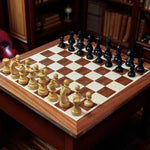
A fine chess table represents a marriage of architectural precision and horticultural history. It's more than a mere surface; it's a structural masterpiece that dictates the rhythm of a game. When you sit before a table crafted from solid Walnut, a faint, earthy scent of beeswax and seasoned timber often greets you. This subtle olfactory detail reminds the player they're engaging with a living material that has matured over decades. While mass-produced furniture often relies on thin veneers that may peel after a mere decade, a master-crafted chess table uses solid hardwoods to ensure it remains a family heirloom for a century or more.
The choice between a satin or gloss finish is never purely aesthetic. A high-gloss finish provides a mirror-like depth that accentuates the grain, yet some players find the slight "drag" of a satin finish more conducive to the precise placement of a heavy, triple-weighted king. This tactile feedback is essential for those who appreciate the cognitive benefits of chess, as a dedicated, high-quality environment fosters the deep concentration required for advanced play. A 2017 meta-analysis confirmed that such regular, focused engagement significantly bolsters memory and executive function across all age groups.
The Artisan Selection of Timbers
Official Staunton remains a custodian of traditional material standards, prioritising Mahogany for its legendary durability and its tendency to develop a deeper, more regal hue as the years pass. For the playing surface, the contrast between dark Walnut and pale Maple isn't just about beauty; it provides the visual clarity needed to calculate complex variations without eye strain. Modern craftsmanship now marries these Victorian aesthetics with ethical sourcing, ensuring that every piece of Ebony or Rosewood is harvested under strict sustainability regulations, such as those established by CITES in 1975.
The Craft of the Inlaid Board
The hallmark of a superior chess table is the "flush finish." This is achieved through the meticulous hand-cutting of individual wood tiles, which are then inlaid with such precision that the transition between a dark and light square is imperceptible to the touch. Master craftsmen must account for the natural expansion of wood, often allowing for tolerances as slim as 0.5mm to prevent warping in varying British climates. This level of detail is what separates a piece of furniture from a work of functional art. If you're looking to elevate your study, you might consider how a hand-finished wooden table serves as both a tactical arena and a sophisticated focal point.
The Practicality of a Dedicated Station: Why Serious Players Choose a Permanent Table
A serious player understands that a game of chess is not merely a mental exercise; it is a physical endurance test. When a match stretches beyond the second hour, the limitations of a standard dining surface or a coffee table become painfully apparent. A purpose-built chess table provides a sanctuary where the geometry of the furniture is as precise as the tactics on the board, offering a level of stability that a portable board simply cannot match.
Why settle for a temporary setup when the game deserves a permanent home? Moving a half-finished game to clear the table for dinner is a frustration every enthusiast has faced. A dedicated station eliminates this disruption, allowing a complex position to remain undisturbed for days if necessary. This permanence transforms the game from a fleeting hobby into a constant, inviting presence within the home.
Ergonomic Comfort and Posture
Most domestic tables sit at heights designed for dining or casual work, yet the ideal elevation for a chess player is specifically calibrated to allow the elbows to rest at a natural angle. A height of approximately 73 centimetres ensures that the player can survey the entire field of play without straining the neck or lower back. This precision allows for deep concentration during intense tournament-style sessions at home.
The "apron," which is the structural frame beneath the tabletop, must be designed with a slim profile to allow for ample legroom. If the apron is too deep, players find themselves sitting too far back, leading to a hunched posture that causes fatigue. By prioritising these specific dimensions, a high-quality table supports the body during those long, contemplative silences that define the grandmaster's pace.
Integrated Storage and Protection
Beyond the physical comfort, there is the vital matter of preserving the integrity of the pieces. Fine boxwood and ebony sets require a stable environment away from the chaotic traffic of a kitchen or dining area. Many Official Staunton tables feature drawers lined with green baize or velvet, which offer a soft haven for captured pieces and prevent the friction that leads to unsightly scuffs. This level of care reflects the importance of The Staunton Standard, ensuring that the equipment remains in pristine condition for decades.
Having a dedicated drawer also means your favourite chess books, scoresheets, and clocks are always within reach. This organisation prevents the "accidental spill" risks common in multipurpose areas, where a stray glass of water could ruin a hand-carved knight or a valuable leather-bound manual. It is about creating a controlled environment where the focus remains entirely on the sixty-four squares.
Another factor worth considering is how a small-footprint chess table fits into the modern home. Many of these pieces occupy less than 60 square centimetres of floor space, making them ideal for quiet alcoves or study corners. Over time, such a table ceases to be just furniture; it becomes a family treasure that appreciates in value, developing a rich patina that tells the story of every match played upon its surface.
Achieving the Perfect Match: Sizing and Proportions for Your Staunton Pieces
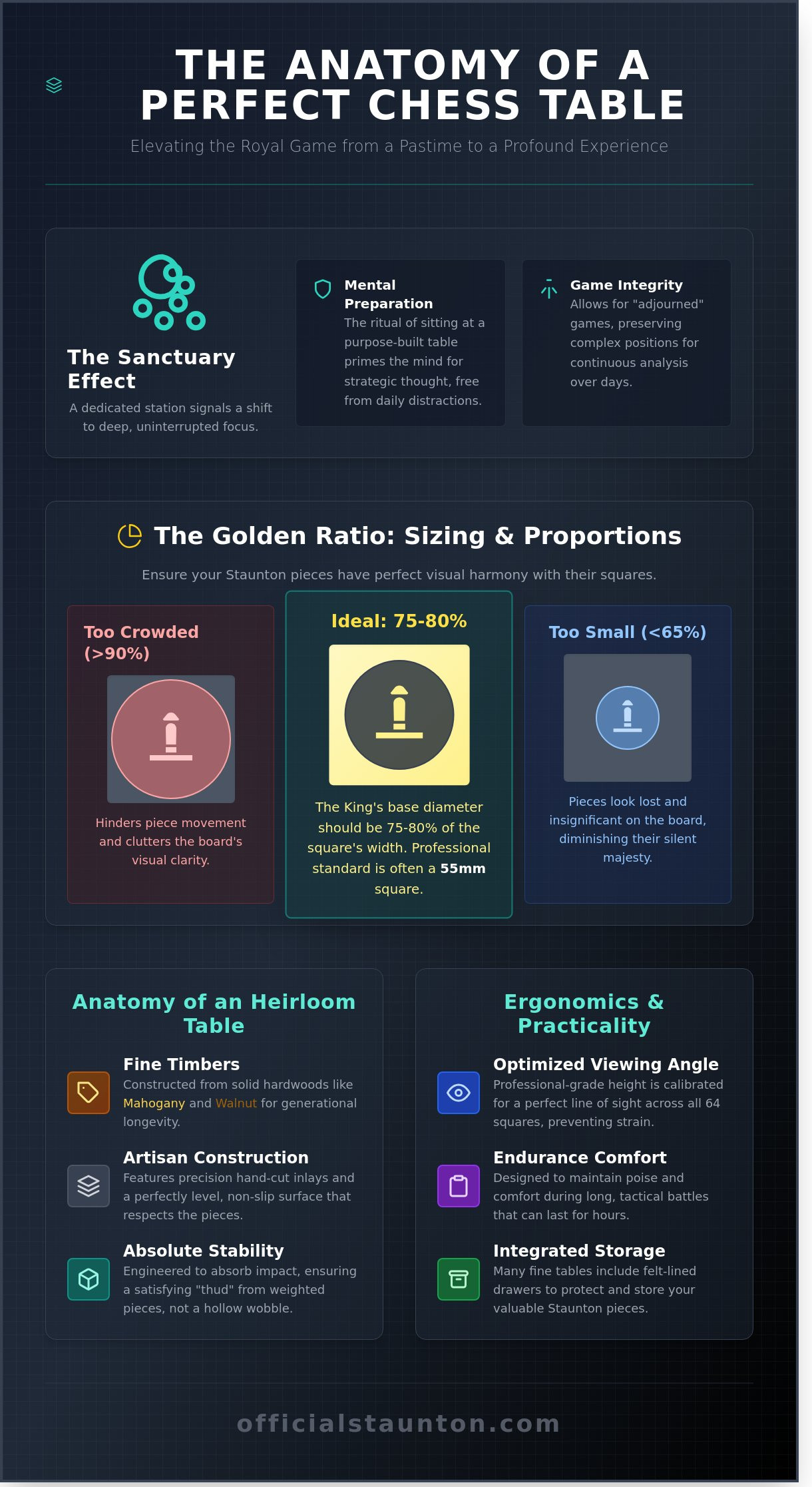
The aesthetic equilibrium of a fine chess table relies upon a precise mathematical relationship that collectors often refer to as the "Golden Ratio" of the board. Selecting a set of Staunton pieces without considering the square size of your table is a common oversight that can diminish the gravitas of even the most exquisite hand-carved boxwood. To achieve true visual harmony, the base of the King should occupy between 75% and 80% of the square's width. If the base exceeds this percentage, the board feels suffocated; if it falls below 70%, the pieces appear diminished, like lonely figures in an oversized hall.
I have often observed that a border of at least 5 centimetres provides the necessary psychological distance between the intensity of the game and the rest of the room. This "breathing room" isn't merely for show. It offers a dedicated space for captured pieces to rest with dignity rather than being cluttered on a nearby coffee table. A grandmaster requires this clarity to maintain focus, and your home deserves the same level of curated intentionality. Common mistakes include:
- Overcrowding: Using a King with a 45mm base on a 50mm square, leaving only 2.5mm of space on either side.
- The "Ghost" Board: Placing small, 3-inch sets on 60mm squares, which makes the tactical positions difficult to read at a glance.
- Neglecting Border Depth: Choosing a table where the squares run right to the edge, stripping the "battlefield" of its frame.
The Technical Breakdown of Proportions
A standard 3.75-inch (95mm) King, which has been the tournament benchmark since the mid-19th century, finds its ideal home on a 55mm square. This specific pairing ensures that even during the most congested middlegame, the pieces retain their individual dignity without bleeding into their neighbours' territory. The foundational elegance of a chess set rests entirely upon the symbiotic relationship between the King’s base diameter and the square’s width, creating a visual cadence that defines the entire experience of play. When these dimensions are ignored, you risk a cluttered appearance where the bishops and knights seem to jostle for air, a distraction that no serious player should endure.
Lighting and Visibility Considerations
The placement of your chess table within a room is as vital as the wood choice itself. Positioning a polished ebony and maple board directly under a harsh overhead bulb can create distracting glares on the dark squares, obscuring the tactical landscape. Natural light from a side window often provides the most evocative play of shadow across the grain, particularly during the late afternoon when the textures of the hand-turned pieces are most pronounced. Another factor to consider is the border colour; a deep mahogany or walnut frame can act as a visual anchor, drawing the eye inward to the lighter playing surface. You can explore how different woods interact with light by viewing our luxury chess table collection, where each piece is designed to honour these traditional proportions.
The Official Staunton Collection: Where Victorian Heritage Meets Modern Craft
Since our founding in 1993, Official Staunton has operated under a single, unwavering mandate: to honour the 1849 design standards established by Nathaniel Cook and endorsed by Howard Staunton himself. We don't view a chess table as a mere piece of furniture; it's a dedicated stage for a cerebral drama that has unfolded over centuries. Our current designs are guided by these original principles, ensuring that the proportions of the squares and the height of the playing surface align perfectly with the ergonomics of a grandmaster-level match.
The process of bringing these pieces to life involves a meticulous vetting of artisan woodworkers. We only collaborate with craftsmen who demonstrate an intimate understanding of timber stability. For instance, we ensure that the hardwoods used in our tables are seasoned to a moisture content of approximately 8%. This specific technical detail is vital for the United Kingdom climate, as it prevents the wood from warping or splitting when exposed to modern central heating. It's this level of foresight that allows us to offer a lifetime of durability.
A Legacy of Quality and Trust
We treat every table as a custodian of the Staunton name, a responsibility we take with the utmost seriousness. There is a profound synergy that occurs when you pair our Morphy or Collector series pieces with a bespoke table. These sets, often hand-carved from fine boxwood and ebony, require a surface that matches their "quiet authority." Our traditional designs avoid the gaudy flourishes of mass-produced alternatives, preferring instead to let the natural grain of mahogany or walnut speak for itself. If a piece ever suffers the wear of decades, our commitment to restoration ensures your investment remains a functional heirloom rather than a relic.
Your Invitation to a Higher Standard of Play
Selecting a professional chess table requires a shift in perspective. You aren't just looking for a surface; you're looking for a sensory experience. The first time your hand moves a triple-weighted piece across a hand-polished surface, you'll notice the difference in acoustics and tactile feedback. When choosing, we suggest matching your king's base diameter to the square size, typically ensuring the base occupies about 75% of the square's width for the most aesthetically pleasing balance. This attention to detail is what separates a casual game from a professional pursuit. Explore the Official Staunton Chess Table Collection to find the piece that resonates with your home.
In the end, a fine table becomes much more than a place to play. It transforms into an anchor for the home, a quiet corner where the digital world fades away and the clarity of logic takes over. It's an invitation to sit, to think, and to engage in a tradition that spans generations. Whether it's a quick tactical puzzle or a gruelling afternoon match, the table stands as a testament to the enduring power of the intellectual game.
Investing in a Legacy for Your Home
Selecting a permanent home for your matches does more than just save time on setup; it transforms the act of play into a ritual. When you choose a dedicated chess table, you aren't just buying furniture, you're securing a piece of history that anchors a room. Since 1993, we've focused on the nuances of the 1849 Staunton design to ensure every square and pedestal meets the exacting standards of the most dedicated UK collectors. The tactile pleasure of hand-crafted Walnut or the deep weight of solid Ebony provides a foundation that temporary boards simply can't match.
It's about finding that precise balance where the proportions of your pieces feel at home on the surface. We've spent decades refining these dimensions so that your strategy can unfold without distraction. If you're ready to move beyond the casual and embrace a lifetime of play, we invite you to Browse our hand-crafted Chess Tables at Official Staunton. Your next great game deserves a setting that's as timeless as the opening moves themselves.
Frequently Asked Questions
What is the standard height for a professional chess table?
A professional chess table usually stands between 73cm and 76cm from the floor, a measurement that ensures ergonomic comfort during long matches. This height allows a player's arms to rest naturally on the surface without straining the shoulders. It's a standard we've observed since the Victorian era, ensuring that the chair and table height remain in perfect harmony for contemplative play.
How do I choose the correct square size for my existing chess pieces?
The most reliable method is to ensure the King's base diameter occupies roughly 75% to 78% of the square's width. If you're using a standard 95mm King with a 45mm base, a chess table with 55mm squares provides the ideal visual balance. This specific ratio prevents the board from looking cluttered while ensuring the pieces don't appear lost in an expansive field of wood.
Is a solid wood chess table better than one with a veneer top?
Solid wood is often praised for its weight and heirloom potential, yet high-quality hand-inlaid veneers are frequently superior for the playing surface itself. Solid boards can be susceptible to expansion and contraction with seasonal humidity, which might lead to slight irregularities over decades. A meticulously crafted veneer on a stable substrate ensures the squares remain perfectly flush, preserving the precision required for a master-grade game.
Can I use a chess table as a regular side table or desk?
Many of our clients choose to use their chess table as a sophisticated side piece or a small writing desk when the game isn't in progress. It's perfectly suitable for this, though we'd recommend using a protective mat if you're placing heavy objects or liquids on the surface. Some designs even feature a removable top that conceals the board, allowing the piece to transition seamlessly from a centre of intellectual battle to a functional furniture item.
How should I maintain and clean the wood on my luxury chess table?
You should only use a dry, soft microfibre cloth for regular dusting, moving it gently with the grain of the wood. For deeper maintenance, a small amount of high-grade beeswax applied every six months will nourish the timber and maintain its natural lustre. It's vital to avoid modern aerosol polishes that contain silicon, as these can create a sticky residue that obscures the fine detail of the grain over time.
Why do some chess tables have drawers while others do not?
Drawers are a practical addition for those who wish to store their pieces safely within the furniture, but they often require a deeper apron that can limit legroom. Tables without drawers usually favour a sleeker, more traditional silhouette that mirrors the minimalist aesthetics of 19th-century London clubs. Choosing between them depends on whether you prefer the utility of storage or the elegant, thin-profile lines of a classic pedestal design.
What are the best types of wood for a high-contrast chess board?
The quintessential pairing remains African Ebony and Boxwood, which offers the most striking visual contrast for serious players. For a slightly warmer aesthetic, Walnut paired with Maple or Sycamore provides a beautiful tonal range that highlights the intricate grain patterns. These combinations aren't just about looks; they provide the clarity needed to scan the board quickly during a time-pressured endgame.
How much space do I need to comfortably fit a chess table and two chairs?
You'll typically need a clear floor area of at least 150cm by 120cm to accommodate the table and two chairs comfortably. This allows for roughly 45cm of space behind each chair so players can sit and stand without feeling cramped. If you're placing the set in a dedicated library or study, leaving a 60cm perimeter around the entire arrangement ensures the room feels spacious rather than cluttered.
Leave a comment