






Guide to Maintaining Chess Pieces and Boards
How to Care for Chess Pieces & Chess Boards
Practical guidance for cleaning, handling, storing and protecting fine chess equipment — with particular attention to wooden Staunton chessmen and traditional wooden boards.
Good care is mostly about restraint
Fine chess equipment does not usually require aggressive cleaning or frequent treatment. Dust, fingerprints, sudden humidity changes, direct heat and careless storage cause more long-term problems than a lack of polish.
The safest routine is simple: handle pieces with clean, dry hands, remove dust with a soft cloth or brush, keep wooden items in a stable indoor environment and avoid introducing moisture or chemicals unless the finish and material are known.

Caring for wooden chess pieces
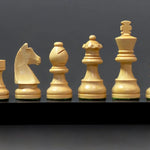
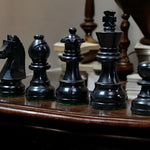
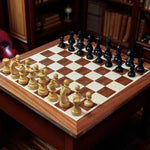
Wooden chessmen are the heart of most traditional Staunton sets. Boxwood is commonly used for the light army, while ebony, rosewood, acacia and other dense hardwoods may be used for darker pieces. Because wood responds to moisture and temperature, stable storage conditions matter more than frequent cleaning.
Dust Gently
Use a clean microfiber cloth and, for carved knights, a very soft brush to remove dust from crevices.
Clean, Dry Hands
Natural skin oils build gradually on polished wood, so dry hands are preferable when handling fine pieces.
Keep Conditions Stable
Avoid radiators, direct sunlight, damp rooms and abrupt changes in heat or humidity.
If a piece needs more than dusting
Begin with a dry cloth. If a surface mark does not lift, use the least aggressive method possible and avoid soaking the wood. A barely damp cloth may be suitable for some sealed finishes, but it should be tested cautiously and the surface dried immediately.
Maintaining wooden chess boards
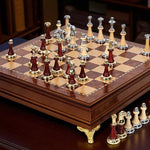
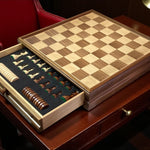
Wooden boards may be constructed from solid timber, veneered hardwood or a combination of decorative veneer over a stable core. Veneered boards are often less susceptible to movement than large solid-wood panels, but both should be protected from excess moisture, heat and direct sunlight.
- Dust with a soft dry cloth.
- Wipe accidental spills immediately.
- Avoid spraying cleaner directly onto the board.
- Keep the surface away from radiators and strong sunlight.
- Store the board flat whenever practical.
- Do not place heavy objects on top during storage.
If the board has a specialist lacquer, wax or oil finish, use only a care product known to be compatible with that finish. Generic furniture products can leave residues or alter sheen.
Caring for brass, bronze and other metal chessmen
Metal chess pieces are durable but may show fingerprints, oxidation or tarnish. Routine care should begin with a soft dry microfiber cloth after handling.
- Remove fingerprints before they build up.
- Keep pieces dry during storage.
- Avoid abrasive pads or harsh compounds.
- Use metal polish only when it is suitable for the exact metal and finish.
Patinated or lacquered metal pieces should not automatically be polished, because polishing can remove or alter the intended finish.
Marble, alabaster and stone chess pieces
Stone pieces are visually impressive but more vulnerable to chipping and chemical damage. Dust with a soft cloth and avoid abrasive cleaners.
- Use pH-neutral products intended for natural stone if deeper cleaning is necessary.
- Avoid vinegar, lemon juice and other acidic cleaners.
- Do not soak porous stone.
- Store pieces so they cannot knock against one another.
- Lift rather than slide heavier stone pieces across delicate boards.

Stable conditions protect a chess set better than frequent treatment
Wood naturally expands and contracts as environmental conditions change. The greatest risk is usually not a normal indoor seasonal change, but prolonged extremes or sudden shifts.
- Avoid direct heat from radiators, stoves and heating vents.
- Avoid prolonged direct sunlight.
- Keep pieces away from damp storage areas.
- Do not store fine wooden sets in lofts, garages or sheds.
- Use a lined storage box where possible.
Humidity guidance
A normal, reasonably stable indoor environment is generally suitable for wooden chess equipment. The original guide recommends a relative humidity range of around 40–60%, which is a useful practical target for rooms containing fine wooden objects.
More important than chasing an exact number is avoiding prolonged very dry or very damp conditions and sudden environmental change.
Marble and stone chess boards
Stone boards should be dusted with a soft cloth and protected from acidic substances that can etch polished surfaces. Use a pH-neutral stone cleaner only when necessary.
- Avoid abrasive pads and scouring products.
- Blot spills rather than rubbing them into porous stone.
- Do not use vinegar or citrus-based cleaners on marble.
- Support the board carefully when moving it.
Glass and acrylic chess boards
Glass boards can usually be cleaned with a suitable glass cleaner, but spray the cleaner onto the cloth rather than directly onto adjoining materials or decorative fittings.
Acrylic requires more care because it scratches more easily. Use a clean microfiber cloth and a mild acrylic-safe cleaner or dilute soapy water. Avoid abrasive polish unless it is specifically intended for acrylic.
Storing chess pieces and boards
Proper storage protects against impact, dust and environmental damage. A lined chess box is ideal for pieces, particularly carved or highly polished sets.
- Keep pieces separated so carved details cannot strike neighbouring pieces.
- Store boards flat where practical.
- Avoid stacking heavy objects on boards.
- Use soft padding when transporting valuable or fragile pieces.
- For display sets, choose a location away from direct sunlight and heat sources.

Chess set aftercare questions
Simple answers to the issues owners most often encounter when looking after chess pieces and boards.
How often should I clean my chess pieces and board?
Can I use household cleaners on wooden chess pieces?
Should I oil wooden chess pieces?
What should I do if a wooden chess piece develops a crack?
How should I clean metal chess pieces?
How do I prevent marble from staining or etching?
What should I do if a wooden board begins to warp?
Can I use ordinary glass cleaner on a glass chess board?
How should I store a set without a dedicated chess box?
Protect the material rather than chasing a permanent showroom shine
Fine chess equipment ages naturally. Sensible handling, stable storage and conservative cleaning will usually preserve it better than frequent polishing or treatment. When in doubt, do less and ask before applying anything permanent.