





The Definitive Guide to Wooden Chess Boards: Artistry, Timber, and Tradition
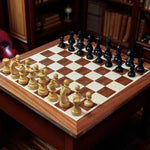
A truly exceptional chess board is never merely a grid of sixty-four squares; it is a silent partner in every tactical calculation and a physical manifestation of the game’s five-hundred-year history. You likely appreciate that the tactile response of a hand-carved piece against the grain of high-quality wooden chess boards can fundamentally alter the atmosphere of a match. It's a sentiment shared by many of the collectors we've consulted since our founding, many of whom noted that the wrong surface can make even the finest Staunton pieces feel disconnected from the play.
This guide will navigate the intricate world of premium timber, revealing the meticulous craftsmanship required to prevent the heartbreak of wood warping over decades of use. I'll provide you with the exact technical specifications needed to harmonise your king height with square dimensions, ensuring your set looks as commanding as it feels. We'll also examine the subtle visual cues that distinguish genuine solid wood from thin veneers, allowing you to invest in a centrepiece that carries the quiet authority of the Official Staunton legacy.
Key Takeaways
- Explore the hierarchy of premium hardwoods to understand why certain species are indispensable for crafting a playing surface that balances aesthetic beauty with structural integrity.
- Gain a professional edge by applying the "75% Rule" to your setup, ensuring your wooden chess boards provide the necessary spatial clarity for complex tactical analysis.
- Learn the essential preservation techniques required to maintain a luxury board, treating the timber as a living object that responds to its environment and the touch of the player.
- Delve into the rich heritage of the Staunton legacy to choose a board that reflects historical accuracy while meeting the exacting standards of the modern connoisseur.
The Enduring Allure of the Wooden Chess Board
A wooden chess board serves as the silent, steadfast foundation for every strategic encounter. While modern alternatives exist in glass or silicone, they lack the gravitas that natural timber provides to a serious player. There is a profound psychological shift that occurs when you sit before a surface that feels like it belongs in a Victorian study rather than a toy shop. For those who appreciate the deep history of chess, the board is an anchor to the past. It transforms a simple match into a ritual.
Choosing from high-quality wooden chess boards is not merely a purchase; it's an investment in a piece of functional art that will likely outlive its owner. This sense of permanence is what distinguishes a collector's item from a mere game board. Each knot and swirl in the timber tells a story of growth over decades, mirroring the patient development of a well-played opening. This connection to nature and history provides a weight of presence that synthetic materials simply cannot replicate.
To better understand the nuances of selecting a high-quality surface, watch this helpful video:
The Sensory Experience of Traditional Play
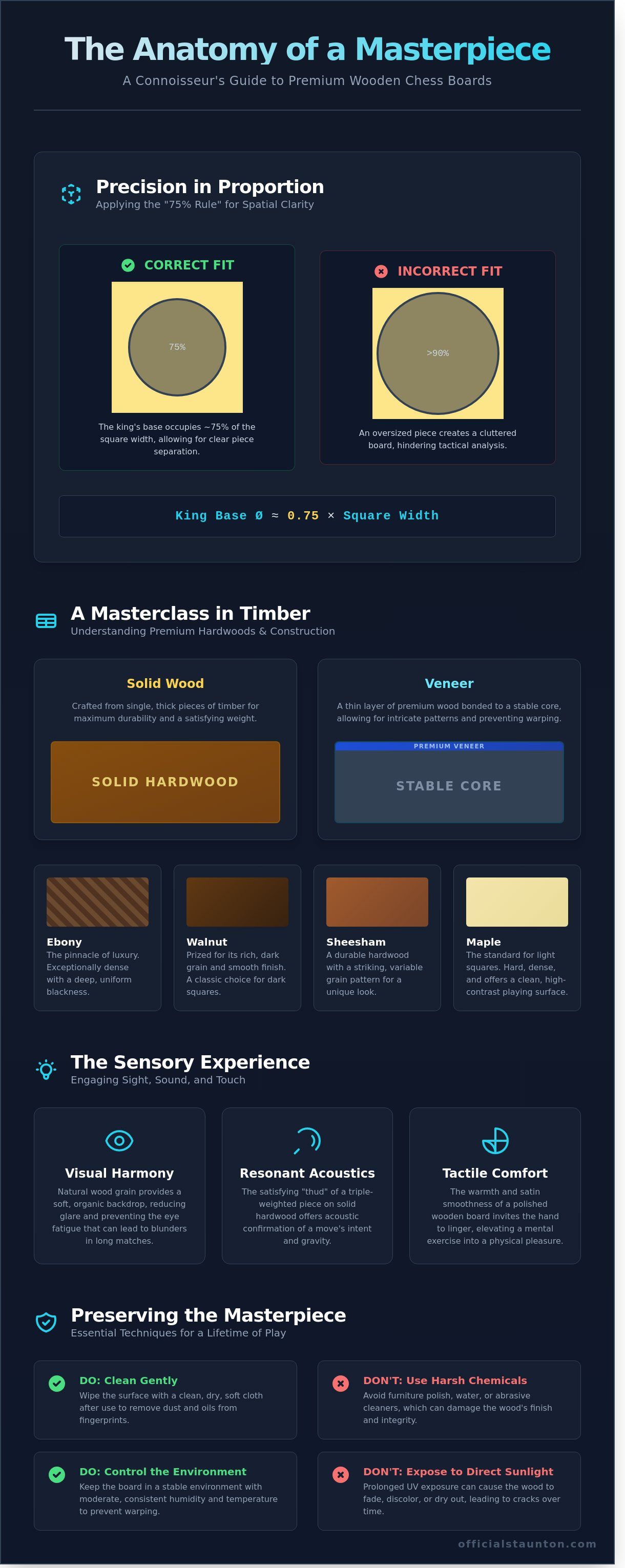
The physical act of playing chess is deeply rooted in the senses. When a player moves a triple-weighted ebony piece onto a solid maple square, the resulting "thud" provides a resonant acoustic confirmation of the move's intent. This sound is a direct result of wood density, where hardwoods like sheesham or walnut absorb and reflect vibrations differently than synthetic materials. It's a satisfying, heavy sound that signals the gravity of a decisive sacrifice.
Visually, the natural grain of the wood offers a soft, organic backdrop that reduces the glare often found on lacquered or plastic surfaces. This visual harmony is essential during a match that might last four hours, as it prevents the eye fatigue that can lead to critical blunders. The warmth of the wood, polished to a satin finish, offers a tactile comfort that invites the hand to linger. It's these small details, like the way a finger slides across a chamfered edge, that elevate the experience from a mental exercise to a physical pleasure.
A Legacy Founded in 1849
The landscape of the game changed forever on 29 September 1849, when the Staunton pattern was first released to the public. This revolutionary design demanded a board of equal sophistication to complement its balanced, architectural lines. Before this period, boards were often gaudy or lacked the precise dimensions required for professional play. The rise of premium wooden chess boards coincided with the need for a standardised tournament surface that could withstand the rigours of competitive use while maintaining an air of elegance.
The evolution from antique inlays to the precision-engineered veneers of today reflects a commitment to both form and function. Official Staunton remains a dedicated custodian of these Victorian-era aesthetic standards, ensuring that every board produced respects the proportions and material integrity established over 170 years ago. By maintaining these rigorous benchmarks, we bridge the gap between the grandmasters of the 19th century and the discerning collectors of the modern era. This dedication ensures that the heritage of the game is preserved in every square, offering a playing surface that would be instantly recognisable to Howard Staunton himself.
Another factor worth considering is how the board interacts with the lighting of your study or drawing room. A well-crafted wooden surface doesn't just sit in a room; it commands it, drawing the eye with its rich textures and inviting the mind to engage in the world's greatest game of skill.
A Masterclass in Timber: Selecting the Perfect Hardwoods
The choice of timber defines the very soul of a board. It isn't merely about the visual appeal; it's about the density, the grain structure, and how the wood responds to the artisan's meticulous chisel. For centuries, a hierarchy of hardwoods has dictated the prestige of a set, with certain species prized for their ability to hold fine detail while providing a stable, heavy playing surface. A master craftsman understands that wooden chess boards are living objects that breathe and shift with the environment, requiring a deep knowledge of botany as much as carpentry.
This hierarchy is often topped by the dense, slow-growing exotics, but the responsibility of the modern maker extends beyond the workshop. We must act as custodians of the forests that provide these precious materials. Since the 2017 updates to CITES regulations, the trade in certain Rosewoods has been rightly scrutinised to ensure legal and sustainable harvesting. A genuine luxury board isn't just a purchase; it's a commitment to preserving the heritage of the natural world through ethical forestry practices that honour the provenance of every plank.
The Classic Contrast: Walnut and Maple
Walnut and Maple remain the definitive choice for those who appreciate a quiet, sophisticated elegance. The deep, chocolate tones of American Walnut provide a soft, matte backdrop that reduces eye strain during the intense concentration of a long match. When paired with the creamy, consistent grain of Maple or Sycamore, the result is a balanced aesthetic that feels both historic and functional. It's a combination that has graced tournament halls for decades, favoured for its understated beauty and resilience.
A well-crafted Walnut board is surprisingly durable, capable of withstanding the rigours of daily play for 50 years or more if properly maintained. There's a certain warmth to these woods that develops a rich patina over time, telling the story of every game played upon them. This pairing isn't just about tradition; it's about a visual harmony that allows the chessmen to stand out without distraction, making it the quintessential choice for a serious home study or a club environment.
Exquisite Alternatives: Ebony, Mahogany, and Macassar
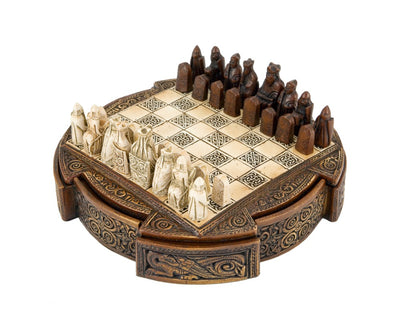
For the collector seeking a more dramatic statement, Ebony represents the pinnacle of material luxury. Its near-total blackness creates a stark, architectural contrast against lighter squares, offering a level of clarity that is almost hypnotic. Historically, traditional carved chess boards often utilised these dense exotics to showcase the intricate skill of the carver and the wealth of the owner. You might also consider the reddish warmth of Mahogany, which pairs beautifully with Rosewood or Padauk chessmen to create a vibrant, fireside glow.
Working with Ebony is a test of patience that few artisans can master. The wood is so dense it can take 3 to 5 years to season properly, and it's notoriously prone to brittle fractures if the moisture content isn't managed with extreme care. Macassar Ebony offers a contemporary alternative, featuring striking vertical grain patterns with stripes of orange and charcoal. These boards aren't just equipment; they're centrepieces that demand attention, turning a simple game into a display of functional art.
Veneer vs Solid Construction: Debunking the Myths
There's a common misconception that solid wood is always superior to veneer. In truth, a solid block of wood is a temperamental thing, prone to warping or splitting as humidity fluctuates in a typical British home. Professional-grade wooden chess boards often utilise high-quality veneers over a stable, engineered core to ensure the playing surface remains perfectly flat for generations. This isn't a cost-cutting measure but a technical necessity to prevent the "movement" that can ruin a solid board during a particularly dry winter.
When you run your hand across a finished board, you shouldn't be able to feel the joins between the squares. A superior veneer is thick enough to be sanded and polished multiple times, maintaining the illusion of a solid block while providing the structural integrity required for a lifetime of use. You can identify a master-crafted piece by examining the mitred corners; a true specialist will ensure the grain wraps seamlessly around the edges. If you're looking for this level of precision, you might explore our collection of hand-finished boards to see this craftsmanship in detail.
The final consideration is always the tactile experience. There's a specific, muted "thud" that occurs when a weighted piece meets a high-quality wooden surface, a sound that plastic or glass simply cannot replicate. It's a sensory reminder of the history we're participating in, connecting us to the players of the past through the simple, honest medium of timber.
Precision in Proportion: Sizing Your Board and Pieces
Achieving a harmonious relationship between the timber field and the hand-carved pieces is a pursuit that separates the casual player from the true enthusiast. At Official Staunton, we believe that the physical geometry of the game should mirror the intellectual clarity of the moves themselves. The established standard, often referred to as the 75% Rule, suggests that the diameter of the King's base should ideally occupy between 75% and 78% of the square's width. This specific ratio ensures that the pieces have enough "breathing room" to be moved with grace while remaining anchored to their respective coordinates.
When squares are overly cramped, the board suffers from what masters often describe as piece blindness. This phenomenon occurs during complex middle-game exchanges when the visual density of the pieces obscures the underlying geometry of the squares. If the pieces are too large for the squares, it becomes difficult to visualise long-range bishop diagonals or subtle knight forks, as the physical presence of the wood creates a cluttered landscape. Conversely, a board that is too large for its pieces can feel sparse and disconnected, making it harder to perceive the tension between opposing forces.
Beyond the technical dimensions of the squares, the border of the board serves a dual purpose that is often overlooked. In many of our bespoke wooden chess boards, a wide border provides an aesthetic frame that elevates the set from a mere game to a piece of furniture. This perimeter also offers the necessary real estate for algebraic notation. For the serious student of the game, having coordinates clearly engraved or inlaid into the border is essential for recording games and following historical annotations without losing one's place in the heat of calculation.
Calculating the Ideal Square Size
To find the perfect match, one should always start with the King. For a standard Staunton No. 6 set, which typically features a King with a 45mm base, a square size of 55mm represents the "Goldilocks" zone of proportion. This provides a 5mm clearance on all sides, allowing the hand to grasp the piece without disturbing its neighbours. In more intimate settings, such as a private study with limited desk space, a 40mm or 45mm square board can be paired with a smaller No. 4 set to maintain this essential ratio without overwhelming the room's proportions.
FIDE and Tournament Standards
The Fédération Internationale des Échecs (FIDE) dictates that squares for competitive play should measure between 5cm and 6cm. This standard is not merely a bureaucratic whim; it's a calculated effort to ensure consistency across international stages, allowing grandmasters to maintain their spatial intuition regardless of the venue. When selecting wooden chess boards for home study, adhering to these tournament dimensions helps bridge the gap between casual practice and serious competition.
Another detail that professionals prioritise is the finish of the wood. While a high-gloss lacquer may look striking under soft home lighting, it can create distracting glare under the intense, direct lights of a tournament hall. Grandmasters almost universally prefer satin or matte finishes, as these non-reflective surfaces reduce eye strain during matches that can last upwards of five hours. This commitment to functional elegance is a hallmark of the Official Staunton philosophy, ensuring that the beauty of the wood never compromises the integrity of the play. It's a subtle distinction, yet it's one that becomes increasingly apparent the more time you spend hunched over the 64 squares in deep contemplation.
Selecting the right proportions is ultimately an act of respect for the 1849 design. By honouring these historical measurements, you aren't just buying a game; you're participating in a centuries-old tradition of tactile and visual excellence that remains as relevant today as it was in the Victorian era.
Preserving the Masterpiece: Care and Longevity
A luxury wooden chess board is far more than a static surface for play; it is a living, breathing assembly of organic fibres that continues to interact with its surroundings long after it leaves the artisan's workshop. When you invest in premium wooden chess boards, you are essentially becoming the steward of a biological history that reacts to every shift in temperature and every touch of a finger. This organic nature means the wood will expand, contract, and change its complexion based on how it is treated within your home.
There is a particular beauty in the way a well-loved board matures over the decades. I have often found that the most captivating sets are not those kept in sterile isolation, but rather those displaying a rich, deep patina earned through years of Sunday afternoon matches. This natural darkening, especially visible in lighter timbers like maple or boxwood, tells a silent story of concentrated thought and competitive spirit. It is a visual record of a legacy that no factory finish can ever hope to replicate, provided the underlying wood is kept healthy.
To ensure this aging process remains graceful, a disciplined approach to daily maintenance is required. Dust is surprisingly abrasive when viewed under a microscope, acting like fine sandpaper if it is allowed to accumulate and then pressed down by a heavy, triple-weighted piece. A simple, light dusting with a dedicated soft brush or cloth before every game prevents these microscopic scratches from dulling the board's deep lustre over time. It's a small habit that pays dividends over a lifetime of ownership.
Cleaning and Polishing Techniques
One must strictly avoid the siren call of generic household furniture sprays, which often contain silicone or harsh solvents that can irreversibly cloud a traditional finish. The true ritual of the connoisseur involves nothing more than a clean, lint-free microfibre cloth to gently lift away skin oils after a session of play. For boards finished with a traditional French polish or a fine lacquer, a sparing application of high-grade Renaissance wax every six months provides a protective barrier. This specific wax, often used by the British Museum, enhances the grain's depth without leaving the greasy residue associated with cheaper oils.
Environmental Considerations
Wood possesses a cellular memory that makes it susceptible to the temperamental British climate. Placing a board near a radiator or a draughty window can cause the timber to contract or expand unevenly, leading to the heartbreak of hairline fractures or warping in the marquetry. Maintaining a stable humidity level, ideally between 40% and 60%, is the most effective way to preserve the structural integrity of the joinery. Sunlight is another silent thief; even a few weeks of exposure to a south-facing window can bleach the rich ebony or mahogany squares into a pale, ghostly imitation of their former selves.
The protection of the playing surface also depends heavily on the pieces you choose to deploy. High-quality sets always feature thick, billiard-cloth felted bases, which act as a soft buffer against the friction of a sliding piece. If you happen to inherit a Victorian antique that shows signs of structural distress, it is always wiser to consult a professional conservator. Attempting a DIY repair on a heritage item can often strip away a century of history that is impossible to recover. Explore our curated selection of luxury wooden chess boards to find a piece worthy of such dedicated care.
Owning a piece of this calibre is a partnership between the craftsman's original vision and the owner's ongoing devotion. By respecting the material's needs, you ensure that the board remains a vibrant centrepiece for the next generation of players to enjoy.
Curating Your Space with Official Staunton
Choosing a board from Official Staunton is an exercise in discerning taste. We believe that a game of chess is a dialogue between players and their tools, which is why our philosophy centres on the intersection of 1849 historical accuracy and contemporary luxury. We don't just provide a surface for play; we curate a heritage. Our curated selection of wooden chess boards featuring Ebony, Walnut, and Mahogany is chosen for grain consistency and seasoned durability. This dedication to authenticity is why our pieces frequently appear on professional film sets where historical precision is non-negotiable. Collectors from London to Singapore seek our expertise because they understand that a board is more than a grid; it's a stage.
You might wonder if the distinction between these woods is purely aesthetic. In truth, it's also about the play of light and the tactile experience of the wood grain. A matte Walnut board absorbs the glare of a study lamp, allowing for hours of comfortable analysis, while polished Mahogany reflects the history of a room with a regal glow. We've seen how a board's weight, often exceeding 3kg for our premium ranges, provides a sense of permanence that lighter, veneered alternatives simply cannot match. The felted underside ensures that your mahogany table remains as pristine as the board itself.
If you're unsure which timber complements your interior or which square size suits your favourite set, our expert advisory service provides bespoke guidance. We've spent decades understanding how a 55mm square interacts with a 4-inch King, and we're delighted to share that technical insight. It's this personal touch that transforms a simple purchase into a lifelong acquisition. Whether you're a grandmaster or a novice enthusiast, the right board serves as an invitation to the game, a silent partner in every strategic breakthrough you'll have.
The Collector Series Boards
Our Collector Series represents the zenith of our craft, focusing on the interplay between deep Ebony and pale Maple. Each square is meticulously hand-inlaid to ensure the surface is perfectly flush, a process that prevents any microscopic catching of a piece's felt base. These wooden chess boards aren't just tools; they're investment-grade assets that appreciate in character and value as the timber matures over the decades.
Completing the Set: Matching Boards to Pieces
Pairing your board with the right pieces is a subtle art. We recommend matching the Morphy series with framed Mahogany for historical warmth, while the Fischer-Spassky series thrives on the clean lines of borderless Ebony. The choice between framed and borderless designs often depends on the visual weight you desire for your space. You can explore our exquisite range of wooden chess boards to find your ideal combination.
Investing in a high-quality board is about more than the next sixty moves. It's about finding a piece of functional art that resonates with the history of the game while standing the test of time in your own home. When you run your hand across a perfectly finished Ebony square, you aren't just feeling wood; you're feeling centuries of tradition refined for the modern player.
Elevating Your Game Through Timeless Craftsmanship
Selecting the right materials is far more than a simple matter of aesthetics; it's about how the natural grain feels under your fingertips during the quiet tension of an endgame. Whether you prefer the deep, chocolate tones of Sheesham or the stark, refined elegance of Ebony, high-quality timber serves as the essential foundation for every strategic encounter. Ensuring the proportions are correct, specifically aiming for that classic 2mm of clearance around the piece bases, will keep your surface a functional masterpiece rather than a mere ornament.
Since 1993, Official Staunton has remained a dedicated custodian of the iconic 1849 Staunton design, ensuring each set carries the intellectual weight of its Victorian origins. We recognise that these items aren't just consumer goods but future heirlooms, which is why we provide professional restoration services to maintain their integrity over the decades. It's this commitment to historical accuracy and material excellence that defines a true connoisseur's collection.
We invite you to view our curated collection of luxury wooden chess boards to find a piece that brings quiet authority to your study. A well-chosen board is a companion for a lifetime, growing more distinguished with every game played upon its surface.
Frequently Asked Questions
What is the best wood for a chess board?
Ebony and Boxwood remain the gold standard for high-end wooden chess boards because of their exceptional density and timeless aesthetic contrast. While Rosewood offers a rich, reddish hue that has been prized since the 1849 Staunton design, Ebony provides a stark, jet-black finish that defines the pinnacle of luxury. These dense hardwoods resist wear over decades of play, ensuring your investment remains a cherished family heirloom for generations.
How do I know what size chess board to buy for my pieces?
You should aim for a square size where the base of your King occupies roughly 75% to 78% of the square's width. For a standard tournament-sized King with a 1.75-inch base, a board with 55mm squares provides the necessary breathing room to prevent the battlefield from feeling cluttered. It's a common mistake to choose a board that's too small; this often stifles the visual flow of a complex middle-game position.
Are solid wood chess boards better than veneered ones?
High-quality veneered wooden chess boards are frequently superior to solid wood options because they're significantly less prone to seasonal movement and cracking. Modern artisans use a stable MDF or plywood core, applying thick slices of precious hardwoods like Walnut or Mahogany to ensure the playing surface remains perfectly flat. While solid wood carries a certain romantic weight, it's susceptible to the UK’s varying humidity, which can lead to heartbreaking structural failures over time.
Why are some wooden chess boards so expensive?
The price of a luxury board reflects the scarcity of materials like Grade A Macassar Ebony, which can cost over £100 per board foot before a craftsman even touches it. Beyond the timber, you're paying for the hundreds of hours required to achieve a perfectly seamless join between 64 individual squares. A master polisher might spend three days applying a hand-rubbed lacquer finish to ensure the board meets the exacting standards expected by Official Staunton collectors.
How do I stop my wooden chess board from warping?
Keeping your board in a room with a consistent relative humidity between 40% and 60% is the most effective way to prevent warping. You should never place your board near a radiator or in direct sunlight, as the intense heat can cause the timber to contract unevenly. If you notice a slight lift, rotating the board away from the heat source often allows the natural fibres to settle back into their original alignment without further intervention.
Can I use a wooden chess board for tournament play?
You can certainly use a wooden board for tournament play, provided the squares measure between 50mm and 65mm and the finish isn't overly reflective. FIDE regulations suggest a non-glare surface to reduce eye strain during long matches; this is why many professional players prefer a satin or matt finish. Using a high-quality wooden board during practice helps you acclimatise to the tactile feedback and visual proportions you'll encounter in competitive environments.
What is the difference between Maple and Sycamore for the light squares?
Maple typically offers a creamy, slightly yellowish tint with a subtle grain, whereas Sycamore provides a brighter, whiter appearance that creates a sharper contrast against dark woods. Many players choose Sycamore when they want their wooden chess boards to have a crisp, modern aesthetic that highlights the deep blacks of Ebony. Maple is often the choice for those seeking a more traditional, vintage look that mimics the patination found on 19th-century sets.
How should I clean a luxury wooden chess board without damaging the finish?
You should only use a dry, high-quality microfibre cloth to remove dust and fingerprints from the surface of your luxury board. If a deeper clean is necessary, a slightly damp cloth followed immediately by a dry one is usually sufficient to restore the lustre without risking the wood's integrity. It's vital to avoid harsh chemical sprays or furniture waxes, as these can build up over time and dull the meticulous details of your pieces and board.
Leave a comment