





What Buyers Look For in a Chess Set UK Guide
A practical guide to the features, materials, sizes, and design details that matter most when choosing a chess set for serious play, everyday use, gifting, or display.
Buying a chess set sounds simple until you actually start looking. Very quickly, what seems like a straightforward purchase becomes far more nuanced. One buyer wants a sturdy set for daily play. Another wants something elegant enough to leave on display. Someone else wants a practical starter set for a child, while another is searching for a meaningful gift with genuine visual presence. The truth is that people may arrive with different intentions, but the features they care about tend to follow a surprisingly consistent pattern.
Most buyers are not really searching for just any chess set. They are looking for the right balance between quality, size, design, and usability. They want pieces that feel stable in the hand. They want a board that looks right with those pieces. They want materials that suit how the set will actually be used. Above all, they want confidence that the set they choose will feel satisfying once it arrives, not disappointing after the first few games.
That is why certain preferences appear again and again. Weighted pieces are consistently popular because they improve stability and the overall feel of play. Staunton design remains the dominant choice because it is familiar, practical, and visually clear. Wooden chess sets continue to attract those looking for tradition, warmth, and a sense of long term ownership, while plastic and travel sets appeal to buyers who care more about durability, portability, and convenience. Size is another major factor, especially king height and square compatibility, because even a beautifully made set can feel wrong if the proportions are off.
What makes this particularly interesting is that buyers rarely search in abstract terms. They search according to purpose. A serious player may look for a tournament standard chess set with weighted pieces and extra queens. A beginner may search for something affordable, durable, and easy to understand. A gift buyer may care more about hand carved wood, an inlaid board, or a more refined finish. These intentions shape the words people use and the features they value most.
This guide explores what buyers really look for when searching for a chess set. It breaks down the most important features, the most common buying priorities, the materials that attract the most interest, and the differences between sets made for play, travel, gifting, and display. It also explains why certain details matter more than others, and why the best purchase is often the one that matches real use rather than simply impressive description.
For anyone selling, buying, or comparing chess sets, understanding these preferences is essential. It is the difference between choosing a set that merely sounds good and choosing one that genuinely feels right.
The features buyers mention most often
For better stability, comfort, and a more serious feel during play
The most recognised and practical design for everyday chess use
Buyers want pieces and board squares that feel balanced together
Wood for warmth and elegance, plastic for durability and travel
Why some features matter more than others
There are many ways to describe a chess set, but not all selling points carry equal weight with buyers. Some details are decorative. Others change the playing experience completely. The most sought after features tend to be the ones that affect stability, recognition, usability, and long term satisfaction.
Weighted pieces are an excellent example. Buyers ask for them because they solve a real problem. Light chess pieces are easy to knock over and can make a set feel flimsy, even when it looks attractive in photographs. A weighted set, particularly one described as double weighted or even triple weighted, tends to feel more composed. The pieces settle onto the board rather than hovering on it. That alone changes how satisfying the set feels.
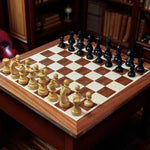
The same principle applies to the Staunton pattern. This is not simply a traditional shape buyers choose out of habit. It remains popular because it works. Each piece is easily recognised, the forms are proven, and the overall look carries authority. For serious play, most buyers trust the Staunton style far more than novelty or themed sets, because clarity matters when actual games are being played.
Material is another detail that buyers immediately understand, even if they do not always articulate it in technical language. A wooden chess set suggests warmth, permanence, and craftsmanship. A plastic set suggests practicality, resilience, and value. Buyers are often not just choosing a material. They are choosing the sort of ownership experience they want.
This is why the best chess sets are rarely the ones with the most exaggerated product descriptions. They are the ones that get the important fundamentals right. Buyers may be drawn in by appearance, but they stay satisfied because the set feels stable, balanced, and right for its purpose.
What buyers usually mean when they search by purpose
The role of buyer intent in chess set searches
One of the clearest patterns in chess set buying is that people search according to what they need the set to do. This matters because the same product can be ideal for one buyer and completely wrong for another. Understanding purpose is therefore more important than focusing only on price or appearance.
Beginners tend to search in practical terms. They often want a set that is easy to understand, sturdy enough for repeated use, and affordable enough to buy without hesitation. For these buyers, complicated descriptions are less important than reassurance. They want a set that feels straightforward. Terms such as durable, pre matched, beginner friendly, plastic, or storage board all tend to resonate strongly.
Regular players search differently. Their focus is less on entry level convenience and more on whether the set supports satisfying play. They care about weighted pieces, Staunton recognition, correct proportions, and sometimes a specific king size such as 3.75 inches. They are also more likely to care about extra queens, because they understand that pawn promotion is a real part of play and not a theoretical extra.
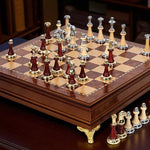
Gift buyers often search through the lens of presentation. They want a chess set that looks thoughtful and complete. That may mean polished wood, an inlaid board, or something described as handcrafted, elegant, or suitable for display. This buyer is not necessarily unconcerned with function, but visual impression tends to come first.
Collectors and more knowledgeable enthusiasts operate differently again. They tend to care about subtler distinctions. Wood type, finish, carving style, historical pattern, and overall authenticity carry more weight. For them, the attraction is not just to chess as a game, but to the set as an object with character and identity.
These differences explain why the same broad market contains very different kinds of products. It also explains why certain phrases appear repeatedly. Buyers are not merely searching for chess sets. They are searching for a version of chess ownership that fits their priorities.
Why weighted pieces remain one of the strongest selling points
Why buyers care so much about weighted chess pieces
There are some features that sound technical but are actually very easy for buyers to understand once they experience them. Weighting is one of them. Even someone with little knowledge of chess equipment can immediately feel the difference between a set that is too light and one that has proper balance.
Weighted pieces offer two obvious advantages. The first is stability. Pieces that are weighted sit more securely on the board and are far less likely to topple during ordinary play. This matters in all games, but it becomes especially noticeable in faster games or during tense positions where hands move more quickly and pieces are handled more often.
The second advantage is tactile satisfaction. A weighted chess set simply feels more serious. The pieces land with greater assurance. They move more cleanly. They have presence. This gives the set a quality that buyers often interpret immediately, even when they do not use technical vocabulary to describe it.
This is why descriptions such as double weighted or triple weighted attract so much attention. Buyers have learned that weight usually signals a better ownership experience. It suggests that the set was designed not just to look like chess equipment, but to function convincingly as chess equipment.
There is also a psychological element to this. Weight implies care. It suggests that the maker did not stop at the visual outline of the piece but considered how it would actually perform. In that sense, weighting is not only a practical feature. It is also a marker of intent, and buyers respond strongly to that.
Why the Staunton pattern still dominates buyer preference
The Staunton design remains the default standard for good reason. When buyers search for a serious chess set, they usually mean a Staunton set whether they realise it or not. The reason is not only tradition. It is usability.
The Staunton pattern succeeds because each piece has a clear and readable identity. The king is unmistakable. The queen, bishop, rook, knight, and pawn all occupy clear visual roles. This reduces confusion, speeds recognition, and makes the set more practical for real chess rather than novelty display. The design has become so successful that it now feels inevitable, but it only feels that way because it solved the problem so effectively.
For players, this clarity is vital. In a real game, especially a faster one, the eye needs to understand the position immediately. Themed or decorative sets may look interesting at first, but they often create friction in actual use. The Staunton pattern avoids that. It allows the mind to focus on the game rather than decoding the pieces.
For buyers, the Staunton design also brings reassurance. It signals seriousness, recognition, and convention. Even if someone is not a competitive player, they know this is the accepted chess form. That alone makes the purchase feel safer and more legitimate. It is the design that says this is proper chess.
This is why terms such as weighted Staunton chess pieces, luxury Staunton chess set, and tournament standard chess set remain so prominent. They combine trust in the classical design with the specific features buyers care about most.
Materials buyers search for most often
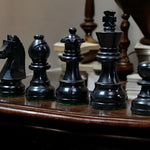
Chosen for richness, prestige, and a classic luxury appearance
Popular for warm brown tones and strong decorative character
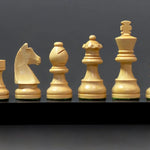
The classic light wood associated with traditional Staunton pieces
Favoured for resilience, value, and practical everyday use
How materials shape buyer expectations
Material is one of the quickest ways buyers sort the market in their minds. It tells them what category a chess set belongs to, what sort of experience it promises, and in many cases how it will make them feel once they own it.
Wood remains the material most strongly associated with aspiration. Buyers searching for high quality wooden chess sets are usually looking for warmth, visual richness, and something with lasting appeal. They do not want the set to feel disposable. They want grain, texture, and a sense that the set belongs in the home as an object of value as well as a playing tool.
Within wooden sets, certain materials carry particular appeal. Ebony is strongly associated with luxury because of its dark, striking appearance. Acacia attracts those who want rich natural brown tones with more warmth than black pieces provide. Boxwood remains central because it is the classic light side material in traditional Staunton sets. Rosewood also attracts interest for buyers who want deeper colour and a more decorative finish.
Plastic occupies a different but equally important role. Serious players often appreciate good plastic sets because they are durable, consistent, and easy to transport. Schools, clubs, and beginners also value them because they can take regular use without anxiety. A buyer searching for plastic is not necessarily lowering standards. They are prioritising practicality.
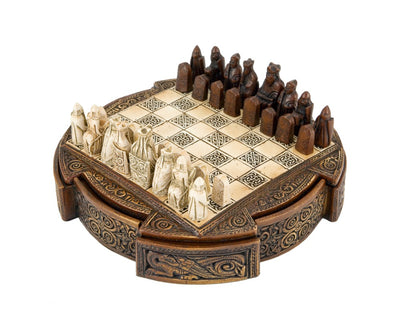
There are also materials that appeal more to decorative or novelty interest, such as resin or alabaster. These may create strong visual impact, but they tend to sit slightly outside the mainstream needs of players who want reliable, recognisable, everyday chess equipment.
This is why material should never be treated as a superficial detail. It is one of the clearest indicators of buyer intent and one of the strongest influences on purchase satisfaction.
The size details buyers care about most
Why size and compatibility are such frequent search priorities
One of the most common ways buyers narrow their choice is by size. This may sound obvious, but it reflects something deeper than simple measurement. Size determines whether a chess set feels practical in the space available, whether the pieces are comfortable to handle, and whether the board looks visually balanced with the set.
King height is usually the starting point. A 3.75 inch king is especially popular because it is widely understood as a tournament standard size. It offers presence without being excessive and pairs well with commonly used board dimensions. A 3 inch king often appeals more to buyers with smaller tables, more compact spaces, or a preference for an easier everyday footprint.
But buyers who know what they are doing do not look only at king height. They also think about board compatibility. A beautiful set can feel awkward if the squares are too large or too cramped. This is why searches often include combinations such as which board fits a 4 inch king or what square size suits a 3.75 inch set. Buyers want confidence that the proportions will work visually and practically.
This is one of the most overlooked areas in chess buying, yet one of the most important. Pieces and board must feel like they belong together. When they do, the set looks coherent and plays naturally. When they do not, even expensive components can feel mismatched.
Extra queens are another detail that increasingly matters. More buyers now understand that a complete modern set should ideally include four queens so that promotions can be handled properly. This small addition signals that the set has been designed with real gameplay in mind rather than only presentation.
The most common search terms and what they reveal
The language buyers use when searching for chess sets is revealing because it tends to be very practical. People may admire beauty and craftsmanship, but when they search, they usually describe what they want in direct terms. This helps show which features actually shape decisions.
Searches such as high quality wooden chess sets and luxury Staunton chess set show a desire for refinement and presentation. Tournament standard chess set and weighted Staunton chess pieces suggest a stronger focus on serious play. Best chess set for beginners usually reflects a need for simplicity, durability, and value. Magnetic travel chess set makes the intention especially clear: convenience and portability come first.
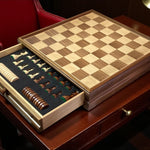
Chess board with storage is another revealing phrase because it combines practicality and neatness. Buyers using this term are often less interested in display for its own sake and more interested in living with the set easily. They want a set that can be enjoyed and then put away without fuss.
These phrases matter because they show that buyers think in clusters. They do not only want wood. They want high quality wooden. They do not only want Staunton. They want weighted Staunton. They do not only want a board. They want a board with storage. Each phrase is really a compact expression of a broader need.
For sellers and writers, recognising these clusters is valuable because it helps explain what buyers care about most. For buyers, it can also be useful because it clarifies what to prioritise. The right wording often leads to the right product because it reflects the right underlying purpose.
What buyers often get wrong
Common mistakes buyers make when choosing a chess set
One of the most common mistakes is buying with the eyes alone. A chess set may look striking in a staged product image, but if the pieces are too light, the board too small, or the design too decorative for practical recognition, the enjoyment can fade quickly. This is why the most visually dramatic set is not always the most satisfying one to own.
Another mistake is ignoring compatibility. Buyers sometimes focus so heavily on king height or board dimension separately that they forget to judge the overall relationship between the two. A good chess set is not merely a board and pieces sold together. It is a balanced visual and practical system.
Weighting is also underestimated by first time buyers. Until someone uses a genuinely weighted set, they may not understand how much it improves the experience. Once they do, it often becomes a non negotiable feature.
There is also a category mistake that happens quite often. Some buyers choose highly decorative materials or themed designs because they want something that looks unusual, only to discover that the set is frustrating in real play. That does not make decorative sets bad. It simply means the purpose must be clear. If serious play matters, clarity and balance should take priority over novelty.
The simplest way to avoid these mistakes is to ask one practical question before buying: how will this set actually be used most of the time. Once that is clear, the right features usually follow naturally.
A simple way to match buyer type to set type
Practical, durable, affordable
Weighted, Staunton, correctly sized
Elegant, warm, presentable
Craftsmanship, material, character
What all of this means for choosing the right chess set
Once buyer preferences are understood, choosing the right set becomes less confusing. The process is no longer about being dazzled by endless options. It becomes a matter of fit.
For beginners, the best set is rarely the most elaborate. It is the one that makes chess easy to start and enjoyable to continue. For regular players, the best set is usually the one that feels stable, balanced, and properly scaled. For gift buyers, it is the set that combines charm with enough substance to feel memorable. For collectors, it is the one with real character and convincing craftsmanship.
The features that come up most often are not random. They come up because they solve genuine needs. Weighting improves the feel of play. Staunton design improves recognition. Correct size improves balance. Quality material improves ownership satisfaction. Extra queens improve completeness. Storage improves everyday practicality.
That is why the strongest chess sets are often those that combine these elements in a coherent way rather than excelling in only one of them. A set that looks beautiful but plays poorly will disappoint. A set that is durable but visually joyless may not remain loved. The best choices tend to sit where usability and appeal meet.
Final thoughts on what chess buyers really want
When people search for chess sets, they may use different words, but their goals are usually quite consistent. They want a set that feels right for the way they live and play. They want confidence in the design, confidence in the size, confidence in the quality, and confidence that the set will remain satisfying after the excitement of purchase has worn off.
That is why weighted pieces, Staunton design, quality materials, correct sizing, and thoughtful details continue to dominate buyer interest. These are not passing preferences. They are the foundations of what makes a chess set enjoyable to own.
A buyer who wants daily play will usually be happiest with a stable, well proportioned Staunton set. A buyer who wants elegance will usually gravitate toward quality wood and a visually balanced board. A buyer who wants portability will prioritise practicality and storage. A buyer who wants a gift will look for warmth, finish, and presence. None of these approaches is wrong. They simply reflect different versions of the same deeper desire: to own a chess set that feels satisfying and complete.
Understanding these priorities makes the market far easier to navigate. It also helps explain why some sets consistently outperform others in buyer interest. The most successful chess sets are not those that try to be everything at once. They are the ones that understand exactly what the buyer needs and deliver it convincingly.
In the end, that is what people are really searching for. Not just a chess set, but the right kind of chess set. One that suits the player, the home, the purpose, and the feeling they want from the game itself.
Leave a comment