






Luxury Chess Sets: The Connoisseur’s Guide to Heritage and Artistry
What if the most decisive move in a game isn't the final checkmate, but the moment you first feel the weighted gravity of a hand-carved knight between your fingers? You likely recognise that a truly exceptional game requires more than just a flat surface; it demands an environment that commands focus and intellectual respect. When you begin your search for luxury chess sets, it's easy to feel overwhelmed by a market flooded with resin imitations that lack the soul and balance of genuine Boxwood or Grade-A Ebony.
It's a common frustration to find a set that looks beautiful in a photograph but feels hollow or poorly balanced once it sits on your table. This guide is designed to remove that uncertainty by exploring the meticulous craftsmanship and historical significance that transform a simple game into a timeless heirloom for your home. We'll examine the specific characteristics of premium hardwoods, the vital importance of the 1849 Staunton proportions, and how to select a board that complements your pieces with mathematical precision. By understanding why a 4.4-inch King requires a specific square size, you'll ensure your collection serves as both a functional masterpiece and a stunning centrepiece that meets the Official Staunton standard.
Key Takeaways
- Appreciate the enduring legacy of the 1849 Staunton design and why this specific silhouette remains the undisputed benchmark for discerning collectors.
- Discover the tactile allure of luxury chess sets crafted from premium Ebony and Boxwood, focusing on the density and natural lustre that only master artisans can achieve.
- Gain insight into the historical narratives woven into iconic series, from the mid-Victorian elegance of the Morphy sets to the brutalist geometry of the 1972 Fischer-Spassky match.
- Learn the professional "Golden Rule" for sizing and colour coordination to ensure your pieces and board are perfectly harmonised in both proportion and visual contrast.
- Understand how dedicated restoration services and meticulous craftsmanship preserve the integrity of your investment, turning a fine instrument of play into a multi-generational heirloom.
Defining the Luxury Chess Set: A Fusion of Heritage and Functional Art
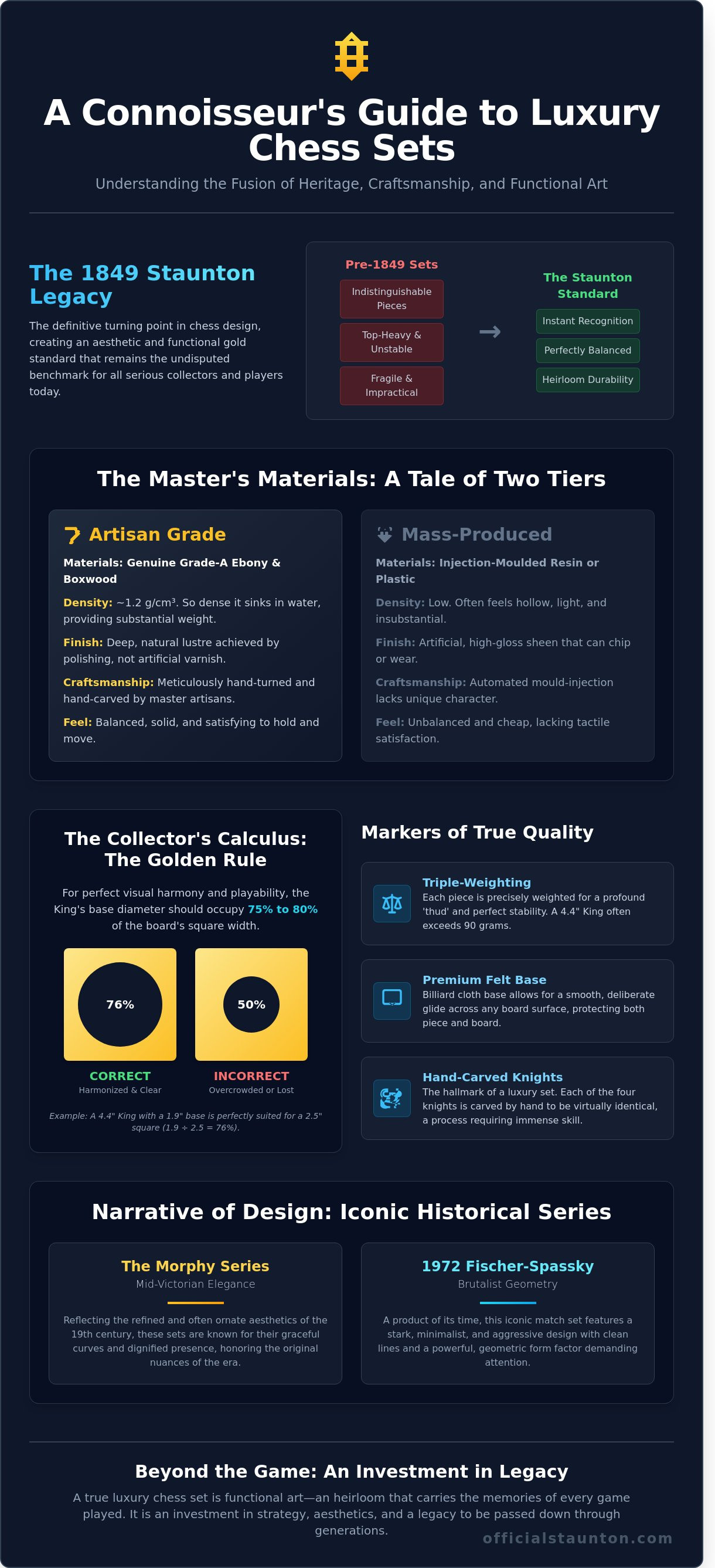
To the uninitiated, a chess set is a mere tool for a game, a collection of thirty-two pieces designed to navigate sixty-four squares. However, for the connoisseur, luxury chess sets represent the physical manifestation of a 1,500-year-old intellectual pursuit. The distinction between a mass-produced, injection-moulded set and an artisan creation lies in the soul of the wood and the precision of the carver’s chisel. While a standard set might facilitate a game, a luxury set commands the room, possessing an emotional weight that is felt long before the first pawn is moved.The definitive turning point in this craft occurred on 29 September 1849, with the highly anticipated introduction of the Staunton pattern chess sets. Before this standardised design, players often struggled with pieces that were top-heavy, fragile, or indistinguishable from one another. This Victorian milestone didn't just provide a uniform language for competitive play; it created an aesthetic gold standard that remains the benchmark for any serious collector or player today.
To better understand the visual allure of these masterworks, watch this helpful video:
The Custodian’s Perspective on Luxury
Choosing a high-end set is an act of custodianship rather than simple ownership. We view these pieces as "functional art," where the beauty of the object never compromises its utility on the board. For the serious collector, authenticity to the original 1849 design is paramount, as it connects the modern player to the giants of the past, from Morphy to Kasparov.
The role of an Official Staunton chess set is to preserve the specific, often overlooked nuances of 19th-century design. This includes the exact curvature of the Rook’s crenellations and the distinct, hand-carved expression of the Knight. These details are not merely decorative; they are a tribute to a heritage that has defined the game for nearly two centuries.
Beyond the Price Tag: The Markers of Quality
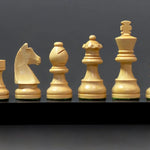
True quality in the world of luxury chess sets is found in the interplay of material rarity and human skill. A set crafted from Grade A Ebony and Turkish Boxwood offers a density and natural lustre that synthetic materials simply cannot replicate. Each piece is hand-turned and then hand-carved, a process that requires years of apprenticeship to master, especially when ensuring that all four Knights in a set are identical in character.
Another factor worth considering is the sensory experience of the pieces in motion. There is a profound satisfaction in the "thud" of a triple-weighted King, perhaps weighing 90 grams or more, as it is placed firmly on a solid wood board. This tactile feedback, combined with the soft glide of premium billiard cloth felt on the base, turns every move into a deliberate, meditative action.
An investment in such a set is an investment in both strategy and aesthetics. These are not objects intended to sit in a box; they are designed to be used, studied, and eventually passed down to the next generation. A well-chosen set becomes a family heirloom, carrying the memories of every game played and every lesson learned across its polished surface.
The Master’s Materials: Why Rare Woods and Weighting Matter
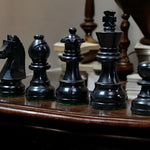
To hold a piece from one of our luxury chess sets is to engage with a lineage of craftsmanship that spans centuries. The choice of material is never merely aesthetic; it's a technical decision that dictates the longevity, balance, and "voice" of the set as it strikes the board. Ebony, often referred to as "black gold" in the workshops of master carvers, remains the ultimate expression of this craft. This timber, specifically Diospyros ebenum, possesses a density of approximately 1.2 g/cm³, meaning it's one of the few woods that will actually sink in water. Its tight grain allows for incredible detail, yet its brittle nature means a single slip of the chisel can ruin forty-eight hours of meticulous work on a Knight’s mane.
Boxwood serves as the essential, light-coloured counterpoint to these darker hardwoods. Since the original Staunton design was codified in 1849, Buxus sempervirens has been the preferred choice for the "white" pieces due to its remarkable durability and ability to take a high polish. While the 12th-century Nishapur chess set showcased the beauty of glazed ceramics in early Persian play, the Victorian era established the marriage of Ebony and Boxwood as the definitive standard for the serious connoisseur. This combination ensures that the set doesn't just look magnificent upon a library table but survives decades of intensive analysis and play.
The Tactile Sensation of Hardwoods
The experience of a game is heightened by the sensory profile of the wood grain. Rosewood offers a visible, swirling figure that feels oily and smooth to the touch, whereas Padauk provides a striking crimson hue that matures into a deep, regal brown over time. Acacia is often favoured for its golden-brown chatoyancy, reflecting light in a way that gives the pieces a three-dimensional depth. A subtle detail often missed by the casual observer is the scent; genuine polished boxwood carries a faint, clean aroma that becomes part of the ritual of the game. We eschew thick chemical lacquers in favour of hand-polishing with natural waxes, a process that allows the wood to breathe and develop a unique patina as it absorbs the oils from a player’s hands over the years.
The Weight of Strategy
The internal mechanics of a piece are just as vital as its carved exterior. Serious players demand "triple-weighting," a process where the base of each piece is hollowed out to accommodate lead slugs. This isn't just about making the pieces feel heavy; it’s about lowering the centre of gravity to prevent the pieces from tipping during a heated blitz match. A premium King in a 4-inch set should ideally weigh between 90 and 110 grams, providing a sense of gravitational authority when placed on the central squares. Achieving this consistency across all 34 pieces, including the two additional Queens provided for pawn promotion, requires a level of precision that mass-produced sets simply cannot replicate.
The final element of a masterpiece is the foundation. High-quality billiard cloth, or in the most exclusive instances, genuine hide leather, is applied to the base. This ensures a silent, cushioned glide across the wooden squares of the board, protecting the finish of both the pieces and the playing surface. One might find that exploring a heritage-grade collection reveals how these invisible technical details harmonise to create a truly professional playing experience. The momentum of a weighted piece as it is pressed into the board carries a psychological weight, signaling to an opponent that every move is backed by the gravity of history and intent.
The Narrative of Design: Exploring Iconic Historical Series
Every time a player reaches for a piece, they are touching a lineage that stretches back centuries. While an ancient 12th-century Iranian chess set showcases the abstract, almost primitive origins of the game, the modern connoisseur often seeks the refinement established during the Victorian era. Choosing between historical series isn't just a matter of visual preference; it's a decision about which chapter of the game’s narrative you wish to inhabit. The right choice among luxury chess sets allows a player to channel the spirit of a specific grandmaster or a defining political era.
The Morphy and Collector Series
Paul Morphy’s influence on the game was as brief as it was brilliant, and the series named after him reflects that mid-19th century sophistication. The standout feature of The Morphy Series Chess Pieces is the knight, which is carved with a level of detail that suggests a living, breathing stallion. You'll notice the mane is often more flowing and the posture more aggressive than standard patterns, capturing the "Pride and Sorrow" of Morphy’s romantic style.
For those who want a "pure" experience, the Collector Series is frequently the first port of call. It focuses on the Victorian "collars" and "coronets," ensuring the proportions match the original 1849 designs with exacting precision. These sets feel substantial in the hand, offering a tactile connection to the smoky London clubs where the Staunton pattern was first codified. The subtle differences in the shank of the queen or the height of the king's cross are what separate these from mass-produced alternatives.
Mid-Century Masterpieces: Fischer and Dubrovnik
The atmosphere of the 1972 World Chess Championship was thick with Cold War tension, and the equipment used had to be equally formidable. The Fischer Spassky Series Chess Pieces are defined by a sturdy, almost architectural silhouette that prioritises stability during high-stakes blitz games. The bases are wide and the stems are thick, creating a visual profile that is both imposing and elegant. This set represents a shift toward a more brutalist geometry that still honours the traditional Staunton roots.
Another mid-century icon is the Dubrovnik Series, which Bobby Fischer famously declared his favourite design for its exceptional playability. This set is notable for its lack of religious finials, a departure from the traditional Christian crosses and mitres found on British sets. It represents a more secular, internationalist approach to the game's design, making it a cult favourite for players who value a clean, distraction-free aesthetic.
Selecting one of these luxury chess sets is a way to align your personal playing style with the history of the board. Whether you prefer the romanticism of the 19th century or the clinical precision of the 20th, the weight and balance of these pieces tell a story. You aren't just buying equipment; you're becoming a custodian of a specific moment in chess evolution. It’s a reflective process that often changes how a player perceives their own moves, adding a layer of gravitas to every exchange on the board.
The Collector’s Calculus: Harmonising Pieces, Boards, and Proportions
The selection of a fine chess set often begins with the pieces, yet the board provides the stage upon which these historical silhouettes perform. Achieving the correct proportions is a hallmark of the true connoisseur. We strictly adhere to the golden rule of sizing, which dictates that the diameter of the King’s base should occupy between 75% and 80% of the square’s width. If a King possesses a 45mm base, a square size of 55mm to 60mm ensures the piece has room to breathe without appearing lost. Investing in luxury chess sets requires this level of mathematical precision to ensure the tactical landscape remains clear during the heat of play.
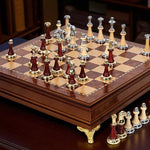
Visual contrast is equally vital for the discerning eye. Deep, dark Ebony pieces require a board that offers both a thematic link and a distinct backdrop. A board crafted from Walnut and Maple provides a classic warmth, while an Ebony and Maple pairing creates a stark, modernist aesthetic that highlights the intricate carving of the knights. The board should also serve as a "centrepiece" that respects the room’s existing architecture. A fixed, heavy board suggests a permanent station of intellectual pursuit, whereas a high-quality folding board offers flexibility for the enthusiast who moves between the library and the study.
This same principle of integrating functional art into a living space is shared by artisans in other fields; for example, the design-led approach of businesses like Red Tree Furniture ensures that even seating and tables contribute to a home's curated aesthetic.
Choosing the Perfect Board
The distinction between solid wood and exquisite veneers is often debated among collectors. While solid wood offers a certain weight and permanence, many of our Luxury Ebony Chess Boards utilise high-quality veneers to ensure the playing surface remains perfectly flat across decades of seasonal changes. We often recommend a satin finish over high-gloss; the softer sheen significantly reduces glare from overhead lighting, allowing for hours of thoughtful study without eye strain. You might also notice how a wider border can frame the field of play, making a standard 55mm square board feel more expansive and commanding on a large mahogany desk.
If you are seeking to complete a bespoke arrangement, you can browse our full range of artisan boards to find the ideal match for your collection.
Storage and Protection
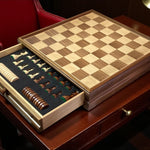
Owning a masterpiece carries the responsibility of stewardship. The primary threat to weighted pieces is the "clinking" that occurs when they are stored loosely, which can lead to hairline fractures in the delicate collars or crowns. Utilising Fitted Chess Boxes is a necessity for any serious collector, as these provide individual slots lined with soft green baize to cradle each piece in total isolation. It is a small but vital investment to preserve the integrity of the hand-carved details.
Environmental factors are the silent enemies of exotic hardwoods. Since wood remains a living material, it reacts to its surroundings; keeping your set away from direct sunlight and radiators prevents the Ebony from cracking or the Boxwood from losing its rich, buttery hue. For cleaning, the artisan’s advice is simple: avoid all harsh chemicals and waxes. A gentle wipe with a dry, high-quality microfibre cloth once a week is all that is required to maintain the natural oils and the soft glow of the timber.
Another factor worth considering is the psychological impact of a well-maintained set. There is a profound sense of ritual in removing each piece from its velvet-lined compartment and placing it upon a perfectly matched board. This process prepares the mind for the complexities of the game ahead, turning a simple hobby into a meditative experience that honours the centuries of history behind the Staunton design.
Preserving the Legacy: Why Official Staunton Remains the Custodian’s Choice
Since our founding in 1993, Official Staunton has operated with a clarity of purpose that transcends simple commerce. We don't just provide equipment; we act as the historical bridge between the mid-nineteenth century and the modern enthusiast. Our mission remains rooted in the preservation of the 1849 design, ensuring that every piece reflects the exact proportions and gravitas intended by Nathaniel Cook and Howard Staunton. This dedication to accuracy means that when you invest in one of our luxury chess sets, you're acquiring a piece of international heritage that has been vetted by experts who live and breathe this specific aesthetic.
Choosing a UK-based specialist offers a level of security that global marketplaces simply can't replicate. Every set that leaves our hands undergoes a rigorous quality control process, where we inspect the grain of the boxwood and the uniformity of the ebony. We offer a comprehensive three-year warranty because we have total confidence in our craftsmanship. If a knight's mane is chipped or a pawn is misplaced a decade from now, our specialist Restoration Services ensure your investment is never rendered incomplete. It's a level of support that treats your set as a lifetime companion rather than a disposable commodity.
This reliance on a dedicated specialist for a specific need is a wise approach in many fields, whether one is acquiring a historical chess set or organizing a memorable group event through a service like stagfactory.com.
One of the most rewarding aspects of owning a high-quality set is the physical transformation it undergoes over decades. There's a subtle, almost poetic reality to how the wood reacts to human touch. The natural oils from a player's hands actually improve the patina of the pieces, deepening the lustre of the wood and giving it a character that no factory finish can mimic. It's as if the set records the history of every match played upon its surface, becoming more beautiful with every move.
The Official Staunton Difference
The distinction lies in the meticulous hand-turning process that takes place within our workshops. Each piece is carved by artisans who understand that a millimetre's difference in the knight’s snout can change the entire personality of the set. We often encourage our clients to pick up the phone and speak with us directly. Whether you're looking for a bespoke board pairing or need advice on wood weights, our team provides the kind of nuanced guidance that only comes from years of specialist experience.
Your Journey into Chess Collecting
For many, a single purchase is merely the start of a lifelong passion. We invite you to explore the Collector Series, a curated selection that celebrates the most iconic designs in history. Starting a collection doesn't require an immediate library of boards; it begins with one iconic set that speaks to your personal taste, around which a broader collection can slowly grow. Discover our full collection of luxury chess sets and find your perfect match today.
There is a quiet, profound joy in the knowledge that the set you play on tonight will one day be used by your grandchildren. A well-chosen chess set is a rare object that resists the modern trend of planned obsolescence. It stands as a silent witness to family history, intellectual struggle, and shared moments of quiet reflection. By choosing a set with a pedigree, you aren't just buying a game; you're securing a legacy that will remain as sharp and commanding in fifty years as it is the day it first arrives at your door.
Investing in a Living Legacy
Selecting a chess set isn't just about finding pieces for a game; it's about acquiring a piece of history that resonates with the weight of every grandmaster who has come before. When you hold a knight carved from ethically sourced ebony or feel the deliberate balance of a triple-weighted piece, you're engaging with a tradition that dates back to the original 1849 Staunton design. It's this marriage of rare hardwoods and meticulous craftsmanship that defines the most sought-after luxury chess sets today.
Since 1993, Official Staunton has dedicated itself to this artistry, ensuring that every board and piece reflects the uncompromising standards of the Victorian era. Beyond the initial acquisition, the longevity of your collection is secured through specialist restoration services, allowing these functional masterpieces to be passed down through generations. Choosing the right set requires an eye for detail and an appreciation for the subtle grain of the wood, but the reward is a lifetime of intellectual and aesthetic pleasure.
Explore the Heritage Collection at Official Staunton and find the piece that speaks to your own sense of history. May your next move be made with a set that truly honours the spirit of the game.
Frequently Asked Questions
What is the best wood for a luxury chess set?
The most coveted timber for high-end sets is genuine Grade One Ebony, sourced primarily from India or Africa, paired with the fine, pale grain of Boxwood. These woods are selected for their immense density and natural oils, which allow our master carvers to achieve the intricate detail found in the Knight's mane and the delicate crenellations of the Rook. While other materials exist, the weight and tactile "click" of an Ebony piece on a solid board remain the definitive experience for any serious connoisseur.
Why are Staunton chess sets considered the standard for luxury and competition?
The Staunton design, first released in 1849 by Nathaniel Cook and endorsed by the great Howard Staunton, brought a sense of architectural stability and visual clarity that previous designs lacked. Before this period, sets were often spindly and easily toppled, but the Staunton pattern introduced a weighted, wide-based silhouette that transformed the game into a professional pursuit. It's this marriage of Victorian elegance and practical durability that has cemented its status as the only acceptable choice for both international tournaments and private collections.
How do I choose the right size board for my chess pieces?
To ensure your luxury chess sets display the correct proportions, the base diameter of your King should occupy between 75% and 78% of the width of a single square. For a standard tournament-sized King with a 95mm height, a board featuring 55mm or 60mm squares provides the necessary space for the pieces to breathe without feeling cramped. If the squares are too large, the pieces will look lost; if they're too small, the board becomes a cluttered battlefield where the beauty of the carving is obscured.
What does "triple-weighted" actually mean for a chess piece?
A triple-weighted piece contains a substantial lead or steel slug hidden within its base to lower the centre of gravity and provide a reassuring heft during play. This process typically brings the weight of a 95mm King to approximately 60 or 70 grams, ensuring it won't tip over if accidentally brushed by a sleeve. When combined with a thick, hand-glued billiard cloth felt, these weighted pieces offer a dampened, authoritative sound that's a hallmark of artisan craftsmanship.
Are luxury wooden chess sets a good investment for collectors?
Handcrafted sets made from rare timbers like Macassar Ebony or Rosewood often appreciate in value, particularly when they're produced in limited editions that replicate specific historical eras. We've seen fine examples of well-maintained sets from the mid-20th century increase in value by 8% to 12% annually as the availability of premium slow-growth timber continues to decline. Beyond the monetary aspect, a high-quality set functions as a functional heirloom that carries the stories of every match played across its surface for generations.
How should I clean and maintain my handcrafted wooden chess board?
You should only ever clean your board with a soft, dry microfibre cloth to remove dust, and apply a specialised micro-crystalline wax like Renaissance Wax once every six months. It's vital to avoid household spray polishes or damp cloths, as moisture can cause the delicate veneers to swell or crack over time. Keeping your set in a room with a stable humidity level between 40% and 50% will prevent the wood from moving, ensuring the playing surface remains perfectly flat for decades.
Why do some luxury sets come with four Queens?
Professional sets include two additional Queens to accommodate pawn promotion, a rule that often leads to having two Queens of the same colour on the board simultaneously. This practice became the standard for luxury chess sets in the late 1980s to avoid the unsightly habit of using an upside-down Rook as a makeshift Queen. It's a thoughtful inclusion that demonstrates a brand's commitment to the authentic rules of the game and the needs of the serious player.
Can I get an antique chess set restored by Official Staunton?
Official Staunton maintains a dedicated workshop where our artisans specialise in the sympathetic restoration of historical sets, including the replacement of missing collars or the repair of chipped Knight's ears. We use period-correct woods and traditional hand-turning techniques to ensure any new components match the unique patina of a 19th-century original. It's a meticulous process that aims to preserve the integrity of the set, treating each piece as a historical artefact rather than just a game component.
Leave a comment