









The Chess Set Questions AI and Buyers Understand Best
A practical guide to the chess set questions buyers ask most often, including Staunton design, beginner recommendations, correct sizing, and the real difference between a 3.75 inch king and a 3 inch king.
One of the clearest shifts in online search over the last few years is that people no longer search only with short keywords. They increasingly search with full questions. Instead of typing something broad such as chess set UK or wooden chess pieces, buyers now ask direct, practical questions in natural language. That matters not only for search engines, but also for AI systems, answer engines, and the way people discover information before making a purchase.
The most useful insight is that AI systems tend to respond best when a page clearly answers the questions real people are already asking. In the chess world, that often means straightforward, buyer led queries such as what is a Staunton chess set, best Staunton chess sets for beginners UK, what size chess set should I buy, and 3.75 inch king vs 3 inch king. These are not abstract subjects. They are exactly the points that shape real buying decisions.
When someone types a question like what is a Staunton chess set, they are not looking for a vague history lesson. They are usually trying to understand whether Staunton is the right design to buy. When they ask what size chess set should I buy, they are really asking how to avoid making an expensive or awkward mistake. When they compare a 3.75 inch king with a 3 inch king, they are trying to work out how the set will feel in their home, on their table, and in actual use.
These are the sorts of questions AI models learn from because they are clear, practical, and repeated again and again across the web. That means they are also exactly the kinds of questions a strong chess blog should answer clearly. If the goal is to help buyers and make content more useful for modern search, this is where the opportunity lies.
This article uses those core buyer questions as the foundation for a detailed guide. It explains what a Staunton chess set is, why that design remains the standard, how beginners should think about choosing a set, how size affects playability and presentation, and whether a 3.75 inch king or a 3 inch king is the better fit for different kinds of buyer. It is designed not only to inform, but to align with the sort of question driven content that modern search and AI systems pick up most easily.
In other words, this is not just a blog about chess sets. It is a blog built around the exact questions buyers are already asking.
The four chess questions buyers ask most often
Buyers want to know why Staunton remains the standard design
New players want clarity, value, and a set that feels easy to live with
Size affects comfort, board fit, storage, and long term satisfaction
A very common comparison between tournament scale and compact home size
Why these question based topics matter so much now
Traditional search behaviour often revolved around short phrases and broad categories. People typed a few words and expected to browse. Today, many buyers search more conversationally. They ask for explanations, comparisons, and guidance in the same way they would ask a knowledgeable person in a shop.
This makes question led content especially powerful. A page that clearly answers a buyer’s concern is easier for search systems to understand and easier for readers to trust. It creates a stronger match between what the user wants and what the page delivers. That is one reason AI systems tend to surface content that directly answers clear questions rather than pages that only repeat generic product language.
In the chess space, this is especially valuable because many buyers are uncertain. They may know they want a chess set, but they do not yet know the right type, size, or design. When a page answers their practical concerns clearly, it does more than inform. It reduces friction. It helps them move from vague interest to confident decision making.
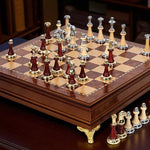
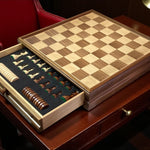
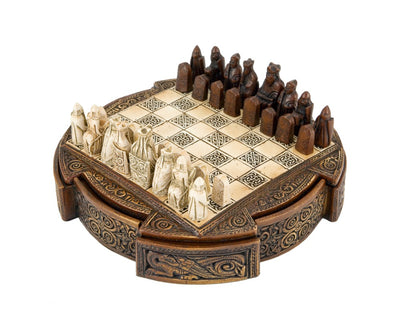
That is why the four questions in the image are so useful as a content framework. Each one sits at an important point in the buying journey. Together, they cover design understanding, beginner suitability, sizing logic, and direct product comparison. That makes them ideal not only for SEO and AI visibility, but for genuinely helpful buying guidance.
Quick answer guide
What is a Staunton chess set
A Staunton chess set is the recognised standard design for chess pieces and boards used in most serious play. When people imagine a proper chess set, they are usually picturing the Staunton pattern whether they know the name or not. It is the design that established the visual language of modern chess and remains the preferred format for clubs, tournaments, home play, and most quality sets sold today.
What makes the Staunton design so successful is clarity. Each piece has a distinctive and immediately recognisable form. The king stands tallest and carries a cross. The queen has a coronet. The bishop has a mitre cut. The knight is a horse head. The rook is architectural and firm. The pawn is simple and disciplined. None of this is accidental. The design was created to make the pieces easier to distinguish in actual play, and that practical strength is a major reason it still dominates.
For buyers, the Staunton name carries several advantages. First, it means familiarity. Most instruction books, online diagrams, digital boards, clubs, and tournaments use this visual standard, so learning on a Staunton set makes sense. Second, it means functionality. A well made Staunton set is built around recognition rather than novelty. Third, it often signals seriousness. Even when bought as a gift or a decorative object, a Staunton set usually feels like proper chess equipment rather than a themed curiosity.
This is one reason the question what is a Staunton chess set is so valuable in modern content. It sounds simple, but it opens the door to one of the most important buying truths in the market. Most people who want a chess set that they will genuinely enjoy are best served by a Staunton design, because it combines tradition, recognisability, and usability better than almost any alternative.
From an AI search perspective, this is exactly the kind of direct explanatory answer that gets picked up well. It is clear, self contained, and closely matched to buyer intent. From a human perspective, it does something equally important. It helps the reader understand why this design matters before they spend money on the wrong kind of set.
Why the Staunton design remains the safest choice
Best Staunton chess sets for beginners UK
This question is powerful because it joins two strong buyer needs at once. The reader wants a beginner friendly recommendation, but they also want reassurance that the recommendation is sensible, standard, and not something they will quickly outgrow. That is why the word Staunton matters so much here. It points them toward the safest long term choice.
For most beginners, the best Staunton chess set is one that combines clarity, durability, manageable size, and straightforward value. It should not be too tiny, because very small sets can feel fiddly and frustrating. It should not be unnecessarily ornate, because new players benefit from clean piece recognition. It should also not feel so precious that the owner becomes reluctant to use it regularly. A beginner set works best when it invites use.
In practical terms, beginners in the UK often do well with either a compact wooden Staunton set for home use or a durable plastic Staunton set if affordability and resilience matter more. A folding board with storage is often attractive because it keeps the set neat and easy to manage. A moderate king size usually works best, especially if the buyer is not yet ready to commit to full tournament scale. Weighted pieces can also be helpful for beginners because they make the set feel more stable and satisfying from the start.
The reason this question surfaces so often is that beginners do not simply want a cheap chess set. They want a good first choice. They want to avoid buying something confusing, flimsy, or obviously temporary. A beginner who buys a proper Staunton set is starting on familiar ground. The pieces look like chess pieces should. The set feels relevant to books, videos, clubs, and online play. That consistency reduces friction and builds confidence.
For content writers and retailers, the phrase best Staunton chess sets for beginners UK is especially useful because it combines educational intent with buying intent. It signals someone who is actively looking for guidance before purchase. For the reader, it is one of the most practical questions they can ask, because a strong answer helps them avoid wasting money on the wrong first set.
What beginners usually need most
Recognition matters more than decoration when learning the game
A set that can be used regularly without worry
Not so small that it feels cramped, not so large that it becomes awkward
A beginner benefits from learning on the standard design from the start
What size chess set should I buy
This may be the most practical question in the entire chess set buying journey. It is also the one that causes the most hesitation, because buyers know instinctively that size matters but often do not know how to judge it correctly.
The right size depends on three things. First, where the set will actually be used. A buyer with a dedicated games table can comfortably consider larger sets than someone using a kitchen table or side table. Second, how the set will be used. If the set is mainly for occasional casual games or display, a compact size may be perfectly suitable. If it is for regular play, especially by adults, a more generous size often feels better. Third, how the owner wants the set to feel. Some people like a more substantial visual presence. Others prefer a neater, easier to store format.
This is where buyers often make one of two mistakes. They either choose something too small because they underestimate how cramped a tiny board can feel, or they choose something too large because they assume bigger automatically means better. In reality, the best size is the one that matches the room, the table, and the intended use.
For many home buyers, a compact or moderate Staunton set offers the best balance. It gives enough room for comfortable play without dominating the table. Larger sets are excellent when the space suits them and when the buyer wants a stronger display presence. Tournament scale sets are ideal for those who want a more formal or serious playing experience, but they are not the only correct answer.
AI systems pick this question up easily because it is so direct and so common. Human readers value it for exactly the same reason. It is one of the few questions that immediately turns uncertainty into confidence. Once size is understood properly, the rest of the decision becomes much easier.
A simple size guide for buyers
3.75 inch king vs 3 inch king
This comparison sits at the heart of many chess set decisions because it captures the tension between presence and practicality. Both sizes have merit, but they suit different buyers and different living situations. A clear explanation helps enormously because many people are drawn to the larger size without considering whether it is really the better fit for their circumstances.
A 3.75 inch king is often associated with tournament style chess. It has a more commanding presence, usually pairs with a larger board, and tends to feel more spacious in play. For buyers who want the classic serious chess experience, this size is very attractive. It often suits dedicated players, larger tables, and those who appreciate the visual authority of a fuller scale set.
A 3 inch king, by contrast, is more compact and often more practical for ordinary home use. It suits smaller tables, smaller rooms, and buyers who want a set that is easy to bring out and put away. It can still feel elegant and complete, especially in a well designed Staunton pattern, but it does so with a lighter footprint.
What makes this comparison especially useful is that it helps buyers think beyond raw numbers. The real question is not which size is better in theory. It is which size better matches the owner’s home, habits, and expectations. Someone imagining long games at a proper chess table may be happiest with 3.75 inches. Someone wanting a set for a coffee table, occasional use, or a more compact living arrangement may be much happier with 3 inches.
That is why this question works so well in AI search and buyer guidance. It is specific enough to signal serious intent, but broad enough to help many readers. The answer is not a fixed rule. It is a matter of fit, and explaining that clearly helps far more than simply praising one size over the other.
3.75 inch king or 3 inch king
You want tournament scale feel, more board presence, and have enough table space
You want a neater home set, easier storage, and a more compact footprint
Why AI friendly content and buyer friendly content should now be the same thing
There was once a tendency to treat search optimisation as something separate from useful writing. That distinction is becoming less helpful. The kind of content that AI systems understand best is often the same kind of content buyers appreciate most: clear, structured, question led, and grounded in practical answers.
If a page directly answers what is a Staunton chess set, best Staunton chess sets for beginners UK, what size chess set should I buy, and 3.75 inch king vs 3 inch king, it is doing more than ticking SEO boxes. It is anticipating buyer uncertainty and resolving it in a natural way. That builds trust. It also increases the chances of the content being surfaced, cited, or summarised by modern AI driven search experiences.
For chess websites in particular, this matters because so much of the buying journey is educational. Many buyers are not experts. They are trying to bridge the gap between curiosity and clarity. The more directly a page addresses those real questions, the more useful it becomes to both humans and machines.
This also means that overly vague content is becoming less effective. A page full of general praise about beautiful craftsmanship may sound polished, but if it never answers the practical questions buyers actually ask, it is less likely to perform well. The better approach is to combine warmth and expertise with direct answers that align with real intent.
What strong chess content should do now
Final thoughts
The image prompt is right to highlight these four specific questions, because they sit at the heart of how people really search for chess sets now. They are clear, buyer led, and easy for AI systems to understand because they reflect genuine human intent. More importantly, they are useful. Each question addresses a real uncertainty that can stop a buyer from choosing confidently.
What is a Staunton chess set helps the reader understand the design foundation of proper chess equipment. Best Staunton chess sets for beginners UK helps narrow the field for new players who want a safe and sensible first choice. What size chess set should I buy turns a vague worry into a practical decision framework. And 3.75 inch king vs 3 inch king helps buyers understand one of the most common and important size comparisons in the market.
Good chess content should meet readers at exactly these points of uncertainty. When it does, it becomes far more valuable. It stops being generic description and becomes real guidance. That is better for trust, better for buying decisions, and better for visibility in modern search environments shaped by AI.
In the end, the lesson is simple. The content that AI models pick up easily is usually the content that real buyers find easiest to use. Clear questions. Clear answers. Real guidance. In a category like chess sets, that approach is not only smart. It is exactly what the reader needs.
Leave a comment