





Are Expensive Chess Sets Worth It? What Actually Changes as You Spend More
You are looking at two chess sets. One is modestly priced and looks perfectly acceptable. The other costs significantly more and promises better materials, better craftsmanship, and a more refined experience.
At that point, most buyers hesitate.
Is the difference real, or is it just presentation? Are you paying for something meaningful, or simply for the idea of quality?
The truth is not as simple as yes or no. Some expensive chess sets are absolutely worth it. Others are not. The difference lies in understanding what actually changes as you move up the price range.
This article breaks that down clearly, without exaggeration, so you can decide based on how you actually intend to use your chess set.
The honest starting point
Before going deeper, it is important to be clear about one thing. Chess itself does not require an expensive set. The game works the same regardless of cost.
What changes is not the rules, but the experience of playing and owning the set.
What you are actually paying for
When the price of a chess set increases, it is rarely due to a single factor. Instead, it is a combination of improvements that build on each other.
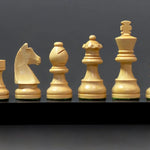
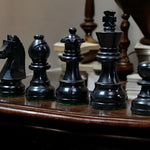
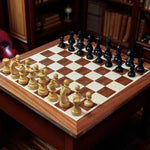
The most obvious difference is material. Higher-end sets use better hardwoods with richer tones and more consistent grain. This creates a deeper visual presence and a more natural feel.
But material alone does not define value. The way that material is used matters just as much.
Weight is one of the most immediate differences you will notice. A well-weighted piece does not feel hollow or unstable. It sits properly on the board. It responds naturally when moved. This alone can transform how a game feels.
Proportion is another critical factor. This is less obvious visually but becomes clear in use. A properly proportioned set feels balanced. The king does not feel top-heavy. The pawns do not feel insignificant. Everything works together.
Finally, there is craftsmanship. This includes shaping, finishing, consistency, and attention to detail. These are the elements that separate a set that looks good in a photograph from one that feels correct in real life.
The difference you feel, not just see
Many buyers expect the difference between cheap and expensive sets to be purely visual. In reality, the most important differences are tactile.
When you pick up a piece from a higher quality set, it feels deliberate. It has weight, balance, and a sense of control. When you place it on the board, it settles rather than lands.
This may sound minor, but over the course of a game, it changes everything. The rhythm of play becomes smoother. The interaction feels more natural. There is less distraction, less adjustment, and more focus on the game itself.
This is why experienced players often prefer better sets. Not because they need them, but because they make the experience more enjoyable.
Where cheaper sets compromise
Budget sets are not flawed. They are simply limited by cost.
To keep prices low, compromises are made. Pieces may be lighter. Details may be simplified. Boards may be thinner or less refined.
For casual use, these compromises are often acceptable. For regular use, they become more noticeable.
The point where it becomes worth it
The key question is not whether expensive sets are better. It is when they become worth the additional cost.
This point is reached when the improvements affect your actual experience in a meaningful way.
If you play regularly, you will notice better balance, better handling, and better stability. If the set is visible in your home, you will notice the visual difference daily.
At that stage, the cost becomes easier to justify because the value is ongoing.
If the set is rarely used or rarely seen, the value becomes less clear.
When expensive is not justified
There are situations where spending more simply does not make sense.
If you are unsure whether you will continue playing, a simpler set is often the better choice.
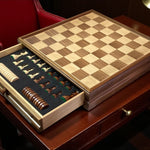
If the set is intended for travel, teaching, or casual use in multiple locations, durability and practicality matter more than refinement.
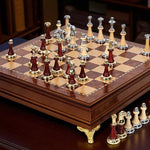
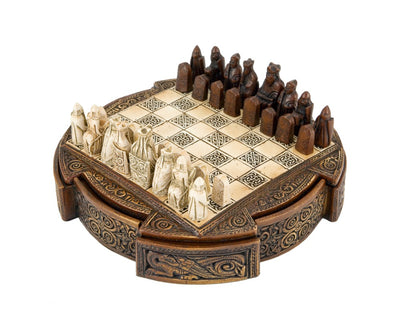
There is also a point where price exceeds practical improvement. At very high levels, you may be paying for rarity, collectability, or artistic detail rather than usability.
This is not wrong, but it changes the nature of the purchase.
A simple decision framework
The emotional factor
This is often overlooked, but it plays a major role.
A well-made chess set becomes part of your environment. It is something you return to. Something you recognise. Something that feels familiar over time.
This creates a different kind of value. Not functional, but experiential.
For many buyers, this is where a higher-quality set justifies itself. Not through necessity, but through enjoyment.
Final answer
Are expensive chess sets worth it?
Yes, when they improve how the set feels, how it looks in your space, and how often you use it.
No, when the additional cost does not match your actual use or expectations.
The best decision is not based on price. It is based on how well the set fits your life.
When that fit is right, the value becomes obvious.
Leave a comment