


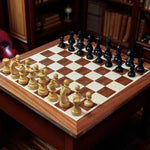


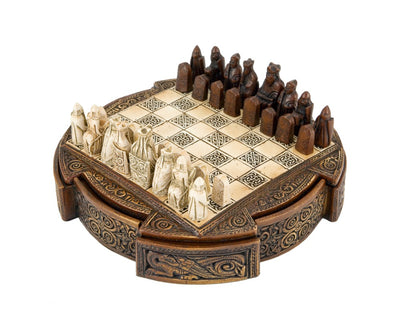

The Connoisseur’s Guide to Wooden Chess Sets: An Investment in Heritage and Strategy
What if the true measure of a grandmaster's focus is found not in the mind, but in the thumb and forefinger as they grasp a piece of hand-carved boxwood? It's a common frustration to invest in wooden chess sets that appear to be premium collections only to find the pieces lack the gravitas and physical presence required for a serious match. You likely understand the subtle irritation of a knight that feels suspiciously light or the visual discord of a board where the squares seem to claustrophobically crowd the kingside.
This guide serves as your definitive roadmap to distinguishing a common plaything from a masterpiece of functional art, ensuring your next acquisition is one of enduring value. We'll peel back the layers of artifice to examine the density of genuine ebony versus ebonised alternatives, the necessity of lead-weighting for that perfect centre of gravity, and the precise historical proportions that define an authentic Staunton experience. By the time we've finished, you'll possess the keen eye of a custodian, ready to select an heirloom that carries the weight of history into every opening gambit.
Key Takeaways
- Appreciate the distinct density of premium timbers like Ebony and Boxwood, ensuring your choice offers the sensory satisfaction and authoritative "thud" of a triple-weighted set.
- Navigate the nuances of grain and contrast to select wooden chess sets that transcend their function, acting as sophisticated centrepieces within a refined interior.
- Apply the "75% Rule" to achieve perfect mathematical harmony between your pieces and the board, a technical detail that separates the true connoisseur from the casual player.
- Delve into the storied lineage of the 1849 John Jaques design to understand why the Official Staunton pattern remains the undisputed gold standard for serious competitive play.
- Learn to evaluate the meticulous hand-carving and historical accuracy of various series, allowing you to invest in a piece of functional art that preserves chess heritage for generations.
Defining the Excellence of Wooden Chess Sets
To the uninitiated, a chess set might appear as a simple collection of thirty-two figures. For the dedicated enthusiast, the distinction between a mass-produced plastic curiosity and a professional-grade wooden chess set is as vast as the gap between a rough sketch and a finished oil painting. Since the Staunton standard was first codified in September 1849, wood has remained the undisputed medium for those who view the game as both a mental struggle and a pursuit of aesthetic beauty. This preference isn't merely traditional; it's a recognition that natural materials possess a soul that synthetic alternatives cannot replicate.
Choosing high-quality wooden chess sets represents an investment in a legacy that matures alongside the player. Unlike stone, which can feel brittle and cold, or plastic, which often carries the sterile weight of a factory line, wood develops a unique patina over decades of use. Every game played adds to the history of the pieces, turning a functional object into a family heirloom that carries the weight of past victories and lessons learned at the board.
The Tactile Superiority of Natural Hardwoods
The organic warmth of a hardwood piece offers a sensory experience that stone or resin simply can't match. When you grip a piece made from genuine ebony or rosewood, there's a certain "grip" and temperature that feels natural to the human hand. It's a subtle detail, but after an hour of intense calculation, the way a polished boxwood King feels in your palm provides a strange sort of comfort. You might notice the piece absorbing a slight heat from your skin, a human digression that reminds you that you're engaged in a living, breathing contest of wills rather than a digital simulation.
The grain patterns found in premium hardwoods ensure that no two wooden chess sets are ever truly identical. In a world of carbon-copy manufacturing, owning a set with its own distinct swirls and mineral streaks offers a sense of exclusivity. These natural "imperfections" are actually hallmarks of authenticity, proving that the material grew in a forest rather than being poured into a mould.
Artisan Craftsmanship vs. Machine Lathes
While modern machinery can produce uniform shapes, it lacks the ability to capture the nuance of a master's touch. A hand-carved set reveals itself through subtle irregularities; perhaps one Bishop’s mitre is cut a fraction of a millimetre differently than its counterpart, or a Rook’s battlements show the faint, purposeful marks of a chisel. These details are the signatures of an artisan who has spent years perfecting their trade, often in workshops that have passed down techniques through several generations.
- The Knight's Challenge: The Knight is the ultimate litmus test for any set. Because it's the only non-geometric piece, it requires freehand carving that no lathe can fully replicate. A high-value Knight will have a distinct personality in its eyes and mane.
- Traditional Polishing: Rather than using thick, plastic-like lacquers, master craftsmen use natural oils and waxes. This preserves the wood's natural lustre and allows the material to breathe, ensuring the set won't crack as it adjusts to the humidity of a British home.
This dedication to the craft transforms a game into a ritual. When you place a triple-weighted piece onto a matching board, the solid "thud" it produces is a testament to its quality. It's a sound that signals the beginning of a serious endeavour, rooted in a design language that has remained the gold standard for over 175 years.
Materials and Weighting: The Sensory Appeal
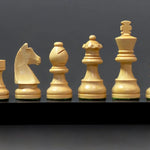
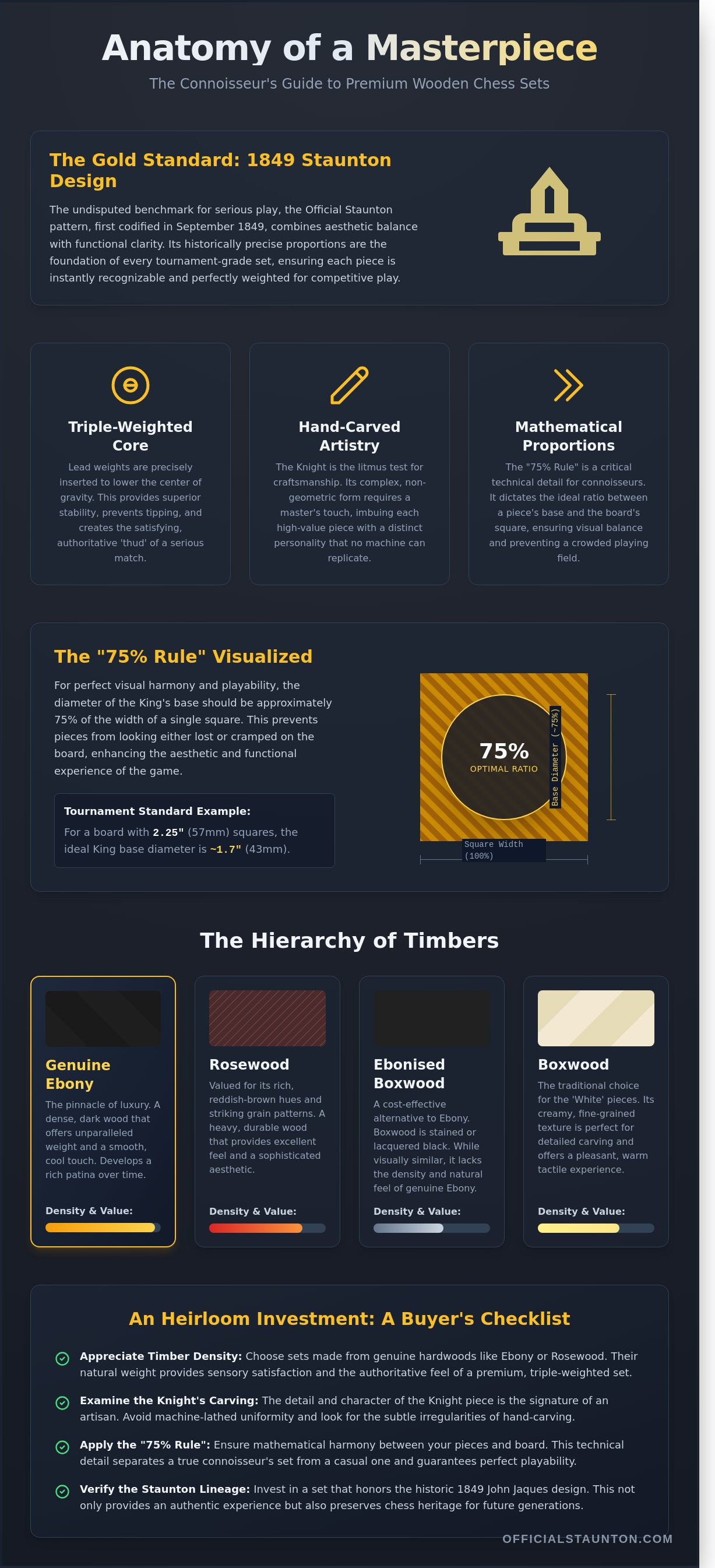
The tactile experience of a premium chess set begins long before the first move is contemplated. It starts with the weight of the piece as it is lifted from its casket. For the true enthusiast, the density of the timber is a silent communicator of quality. Boxwood, often paired with darker hardwoods, provides a creamy, fine-grained texture that has been the standard for the White pieces since the original 1849 Staunton design. When you move to the dark side of the board, the choice of material defines the set’s character and its place in your collection.
Triple-weighting is more than a marketing term; it's a precise engineering requirement. By hollowing the base and inserting lead or steel weights, artisans lower the centre of gravity. This creates that satisfying "thud" on the board, a sound that signals intent and authority during a match. A well-balanced piece won't topple if brushed accidentally. A King standing 4.0 inches tall typically requires a base diameter of at least 1.75 inches to maintain its equilibrium. To protect the chessboard from scratches, we apply high-quality billiard cloth or, for our most prestigious collections, thick leather felts that offer a silent, cushioned glide across the wood.
The Hierarchy of Woods: From Sheesham to Ebony
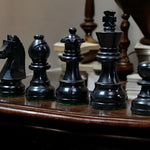
Sheesham, frequently referred to as Golden Rosewood, serves as a robust entry point for those seeking durable wooden chess sets that withstand regular blitz play. However, the discerning collector often looks toward Genuine Ebony. This wood is so dense it actually sinks in water. It's vital to distinguish this from "ebonised" boxwood, which is merely boxwood stained black to mimic the appearance of ebony. While ebonised sets are attractive, they lack the natural oily lustre and the immense physical weight of the genuine article.
The Seasoning Process: Ensuring Longevity
Natural timber is a living medium that breathes and reacts to its environment. Without proper seasoning, a beautiful Knight can develop a hairline crack within months due to shifts in central heating or humidity. Official Staunton understands this fragility. We invest between two and four years in drying our timbers before a single chisel touches the surface. This patient approach ensures the wood reaches an internal equilibrium, significantly reducing the risk of warping. You might find a cheaper set elsewhere, but it likely hasn't undergone this rigorous curing process. For those who value longevity, exploring our hand-crafted luxury collections reveals the difference that time and patience make.
Comparing Wood Species and Aesthetic Finishes
Selecting the right wooden chess sets involves more than a simple appreciation for timber; it requires an understanding of how a set interacts with the architecture of your home. A fine set should anchor a room, acting as a focal point that reflects the owner's taste. When you choose a wood colour, it’s vital to consider the existing furniture. A dark, mahogany-filled study often benefits from the stark, crisp contrast of an Ebony set, while a lighter, more contemporary space might be better served by the warm, autumnal tones of Rosewood.
The visual dialogue between light and dark pieces is the foundation of any game. If the contrast is too low, the board becomes a muddy landscape where the position is difficult to read at a glance. Professional players often look for that "snap" of clarity provided by the traditional pairing of pale and dark woods. Beyond the colour, the finish plays a practical role in your concentration. A high-gloss finish can look magnificent under gallery spotlights, yet the resulting glare during a three-hour match can lead to significant eye fatigue. Many connoisseurs prefer a satin or "buffed" finish, which offers a soft, tactile warmth and allows the natural grain to breathe without reflecting every overhead light source.
The historical weight of the "Natural Boxwood" and "Black Ebony" pairing cannot be overstated. This combination became the definitive standard following the 1849 Staunton release, chosen specifically for the density and durability required in the bustling chess clubs of London. It remains the quintessential choice for those who value the heritage of the game above all else.
Boxwood: The Unsung Hero of the Chess World
Boxwood is the quiet foundation of almost every premium set produced over the last 175 years. Its incredibly tight, closed grain is what allows an artisan to carve the intricate details of a Knight’s mane without the wood splintering under the chisel. One of the most rewarding aspects of owning a Boxwood set is its "living" quality. As the decades pass, the wood absorbs natural oils from the player’s hands, gradually developing a rich, honey-toned patina that serves as a physical history of every match played.
The Exquisite Variance of Rosewood and Padauk
For those who find the absolute black of Ebony a little too severe, Rosewood offers a softer, more organic aesthetic. Its variegated grain features deep chocolate browns and subtle violet streaks, ensuring that no two pieces are ever identical. This variety brings a sense of natural artistry to the table that solid colours simply cannot match.
If you wish to make a bolder statement, Bud Rosewood, frequently called Padauk, provides a fiery brilliance that completely alters the mood of a study. The deep crimson and burnt orange hues of a Padauk set create an atmosphere of vibrant intellectual energy. It is a choice for the collector who views their board not just as a tool for strategy, but as a commanding piece of sculpture. Official Staunton often recommends these sets for rooms with neutral palettes, where the wood’s natural fire can truly take centre stage.
The Buyer’s Framework: Proportions and Purpose
The relationship between the piece and the board is the foundation of a harmonious game. When you choose between various wooden chess sets, the physical dimensions dictate the flow of play. A board that is too small for its pieces feels cluttered and claustrophobic, while a board that is too large makes the pieces look isolated and diminished. This balance is not merely a matter of taste; it is a technical requirement for serious study and competitive play.
Achieving the Perfect Square-to-Base Ratio
The golden standard for a balanced aesthetic is the "75% Rule." This guideline suggests that the diameter of the King’s base should occupy approximately 75% to 78% of the width of a single square. In professional circles, such as those governed by the English Chess Federation, a 2.25-inch (57mm) square is the benchmark. For this size, a King with a base diameter of 1.75 inches (44mm) provides the ideal visual "breathing room." It's vital to measure the King’s base rather than his height, as the footprint determines how the pieces interact during a crowded mid-game exchange.
Another factor worth considering is the distinction between a tournament-sized set and a library set. While a 3.75-inch King is standard for competition, a smaller 3-inch "coffee table" set might be more appropriate for a compact study or a casual display. Official Staunton recommends that collectors always consider the intended environment before committing to a specific size, as a grand set requires a grand space to be truly appreciated.
Folding Boards vs. Solid Wood Cabinets
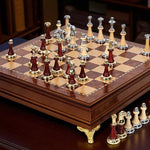
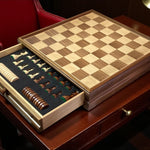
Choosing the right surface often depends on whether the set is intended for a dedicated study or for travel between clubs. A solid wood cabinet, often featuring meticulous veneer inlays or solid blocks of maple and walnut, provides a sense of permanence and gravitas. The tactile pleasure of a perfectly flush surface, where the transition between squares is imperceptible to the touch, is a hallmark of superior craftsmanship. These solid boards are designed to remain stationary, serving as a centrepiece of intellectual life in the home.
For the player who values mobility, a high-quality folding wooden board offers a practical compromise without sacrificing the dignity of the materials. These boards allow for the portability of a tournament set while maintaining the authentic feel of real timber. Beyond the board itself, safeguarding your investment is paramount. A matching wooden box, lined with green baize or felt, ensures that your pieces remain free from dust and accidental damage. This isn't merely a storage solution; it's a commitment to preserving the heritage of the set for future generations. If you're ready to find a set that perfectly balances these proportions, explore our exquisite collection of wooden chess sets to find your ideal match.
The Official Staunton Distinction: A Legacy Preserved
Official Staunton functions as a dedicated guardian of the original 1849 John Jaques of London design. This commitment isn't merely about imitation; it represents a rigorous adherence to the specific proportions and weighting that defined the game’s golden age. When you run your hand over one of our wooden chess sets, you're feeling the same balance and tactile gravity that Paul Morphy or Boris Spassky would have recognised. Our Fischer-Spassky series, for instance, meticulously recreates the 1972 World Championship atmosphere, ensuring every detail from the knight's profile to the king's finial remains historically accurate to that cold-war era masterpiece.
Collectors across the globe look for our hallmark because it signifies more than just a purchase. It represents a seal of authenticity that respects the artisan's welfare as much as the player's experience. We source our timbers, such as the dense, dark Ebony and the resilient Boxwood, through ethical channels that comply with international sustainability standards. This ensures that the master carvers who spend hours perfecting a single knight’s mane are supported by fair labour practices, preserving their rare skills for another century.
The Morphy Series: A Masterpiece in Boxwood
The Morphy Knight is often considered the soul of this particular collection. Its design features a distinctive, flowing mane and an aggressive, flared nostril that perfectly captures the spirit of mid-19th-century craftsmanship. Each piece is hand-carved from premium Boxwood and polished to a soft, buttery sheen that develops a rich patina over decades. This series serves as the definitive expression of Victorian elegance, offering a level of detail that modern machine-made sets simply cannot replicate. You are invited to explore the full range of these historically significant pieces on the Official Staunton storefront to find a set that resonates with your own style.
Restoration and Care: Protecting Your Heirloom
Owning a piece of history requires a quiet commitment to its preservation. If you possess an antique set that has lost its lustre or suffered from the passage of time, our specialised restoration team in the UK can breathe life back into the timber. For daily maintenance, a simple dry microfibre cloth is usually sufficient. You should never use chemical sprays or standard furniture polishes, as these substances can seep into the grain and cause irreversible swelling or discolouration. A well-tended set becomes more than a tool for strategy; it turns into a physical bridge between the past and the future, carrying the echoes of every game played upon its surface.
Securing a Legacy of Intellectual Elegance
Choosing a fine set is rarely a matter of simple utility; it's an act of stewardship over a design that has defined the intellectual landscape since 1849. When you feel the substantial weight of a triple-weighted piece or admire the intricate grain of ethically sourced ebony, you're engaging with a tradition that transcends the board. These wooden chess sets aren't just tools for strategy; they're functional masterpieces that carry the quiet authority of history into your study or drawing room.
Official Staunton has served as the dedicated custodian of this specific heritage since 1993, ensuring that every hand-carved knight and polished king reflects the exacting standards of the original Victorian artisans. We provide a comprehensive 3-year warranty on all our luxury chessmen, a commitment that mirrors the enduring nature of the premium hardwoods we select. It's an investment in quality that ensures your set remains as striking for future generations as it is during your first match.
The right choice transforms a simple game into a profound sensory experience. We invite you to Explore our exquisite collection of handcrafted Wooden Chess Sets and discover a piece of history that resonates with your own appreciation for excellence. May your next move be made with a piece that feels as significant as the strategy behind it.
Frequently Asked Questions
What is the best wood for a chess set?
Boxwood remains the definitive choice for the light pieces in premium wooden chess sets, primarily due to its tight grain and ability to hold intricate carved details. For the dark side, genuine Ebony offers a density of roughly 1,200 kg/m³, providing a natural weight and a lustrous, obsidian finish that ebonised alternatives cannot fully replicate. These hardwoods have been the standard since the mid 19th century, chosen by artisans for their durability and the way they develop a rich, honeyed patina over decades of use.
How do I know if my wooden chess pieces are "triple-weighted"?
You can identify triple-weighted pieces by their substantial heft, typically weighing between 1.5 and 2 kilograms for a full 34 piece set. If you were to remove the felted base, you'd often find a lead or steel slug securely fitted into the core to lower the centre of gravity. A standard King in such a set often weighs over 75 grams, ensuring it won't topple easily during a heated blitz match or a thoughtful afternoon of study in your library.
What is the difference between Staunton and non-Staunton wooden sets?
The Staunton pattern, first registered in 1849 by Nathaniel Cook and championed by Howard Staunton, is defined by its architectural simplicity and clear hierarchy, whereas non-Staunton sets often prioritise artistic expression over playability. While a non-Staunton set might feature abstract shapes or historical figures, the Official Staunton design adheres to the specific proportions that have governed tournament play for over 170 years. This standardisation ensures that players can immediately recognise each piece, from the crenellated Rook to the mitred Bishop, without a moment of hesitation.
How do I prevent my wooden chess board from warping?
Maintaining a stable environment with a relative humidity between 40% and 55% is the most effective way to prevent a wooden board from warping. Wood is a hygroscopic material that breathes; placing it near a radiator or in direct sunlight can cause the different wood species to expand at uneven rates, leading to 1 or 2 millimetres of lift at the corners. It's wise to store your board flat and use a dedicated felt bag to shield the timber from rapid temperature fluctuations within your home.
Can I use a wooden chess set for professional tournament play?
You can certainly use wooden chess sets for professional tournaments, provided they meet the FIDE standards for piece height and base diameter. A King height of approximately 95 millimetres is the preferred size for top tier events, such as the Candidates Tournament or the World Chess Championship. Official Staunton sets are frequently chosen for these prestigious gatherings because their weighted bases and classic silhouettes provide the gravitas required for high stakes competitive play.
Why are the Knights in some wooden sets so much more detailed than others?
The Knight is the only piece in a set that cannot be created entirely on a mechanical lathe, requiring an artisan to spend up to 2 hours hand-carving the facial features of a single piece. In premium wooden chess sets, the level of detail in the Knight's mane and musculature serves as a hallmark of the carver's skill and the set's overall quality. A set where all four Knights are virtually identical indicates a master craftsman's steady hand, a tradition that elevates the set from a mere tool to a work of sculpture.
Is genuine Ebony wood better than ebonised Boxwood?
Genuine Ebony is superior for its natural weight and deep, organic grain, whereas ebonised Boxwood is a more affordable alternative created by staining light wood with black dye. While an ebonised set might look similar at a distance, it lacks the 1,200 kg/m³ density of true Diospyros ebenum, and the stain may eventually wear away at the sharp edges after years of play. For a serious collector, the £200 to £400 price premium for genuine Ebony represents an investment in a material that won't fade or lose its lustre over time.
How do I choose the right size board for my wooden chess pieces?
The ideal board size is determined by ensuring the King's base diameter occupies roughly 75% to 80% of the individual square's width. For a King with a 45 millimetre base, a board with 55 millimetre squares provides the perfect balance of space and presence. This specific ratio prevents the pieces from feeling cramped, allowing the beauty of the timber to be visible between the ranks and files, which is essential for clear tactical visualisation during a game.
Leave a comment