





Understanding Natural Variations in Wooden Chess Boards
What You’re Really Seeing When You See “Marks” in the Wood


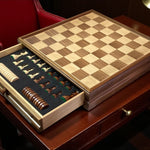
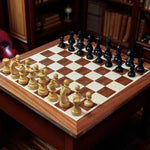
Real Customer Images of a Returned Chess Board
When purchasing a real wooden chess board—particularly one crafted from natural materials such as maple, boxwood, or similar light hardwoods—it’s essential to understand what constitutes a defect versus what is simply the authentic character of the wood.
This article is based on a real customer query (anonymised), and serves as a clear, factual guide to help buyers set accurate expectations when investing in genuine wooden chess boards and sets.
The Customer Concern (Anonymised)
A customer contacted us after receiving their chess board, stating:
“There is a large mark (possibly a burn or tool mark) on the board… there are blemishes all over the board in the light squares… this does not look like natural wood. It looks more like a burn or scuff when the black colouring was added.”
They later added:
“When I look at the back, it’s perfect. Not a single blemish. All the marks are on the board side… I counted over 20 blemishes.”
This is a very common concern—and it almost always comes down to a misunderstanding of how natural wood behaves.
The Key Point: These Are Not Manufacturing Faults
What the customer is seeing are natural grain variations and mineral streaks within the wood, not burns, scuffs, or production defects.
Here’s what is actually happening:
-
Light squares are typically made from maple or similar hardwood veneers
-
Maple often contains mineral streaks, grain shifts, and tonal variation
-
These can appear as:
-
faint brown lines
-
darker patches
-
irregular streaks
-
subtle shadowing within the grain
-
These features are inherent to the timber itself—they are not added, caused, or introduced during manufacturing.
Why Do These Marks Appear Only on the Playing Surface?
This is another point that often causes confusion.
-
The playing surface uses carefully selected veneers that prioritise:
-
grain alignment
-
structural stability
-
visual contrast with dark squares
-
-
The reverse side is usually:
-
a different layer of wood
-
or a backing veneer chosen for stability rather than visual character
-
In simple terms:
-
Front = decorative, natural, expressive grain
-
Back = uniform, structural, often plainer
Why It Can Look Like a Burn or Manufacturing Mark
Natural wood can sometimes mimic defects:
-
Mineral streaks can resemble scorch marks
-
Grain lines can look like scratches
-
Density variations can create darker patches
Under certain lighting, especially:
-
direct sunlight
-
angled indoor lighting
-
phone camera contrast
these natural features can appear more pronounced than they actually are.
What Defines a Genuine Defect?
To be precise, a manufacturing defect would include:
-
chipped veneer
-
lifting or bubbling of the surface
-
glue residue
-
cracks or splits in the wood
What you see in the images and described above does not meet these criteria.
The Reality of Buying Real Wood
This is the part many buyers are not told clearly enough:
Real wood is not uniform.
If a board looks perfectly identical across every square, it is usually:
-
stained heavily
-
printed
-
or made from synthetic materials
Authentic wooden chess boards will always show:
-
variation
-
individuality
-
organic inconsistency
That is not a flaw—it is the defining feature of real craftsmanship.
Why Some Boards Look “Cleaner” Than Others
Even within natural wood, there is variation in grading:
-
Higher-grade veneers → fewer visible streaks
-
Standard-grade veneers → more visible character
Both are legitimate. Neither is defective.
However, perception plays a role:
-
Some customers prefer a clean, uniform look
-
Others appreciate natural grain character
Neither preference is wrong—but it’s important to align expectations before purchase.
Our Position (Clear and Factual)
In the case above, our response was:
-
The marks are natural grain variations
-
They are not burns or manufacturing faults
-
The board meets quality standards
However:
-
We still offered an exchange to meet the customer’s expectations
-
Or a return under standard policy
This is the correct and balanced approach.
Practical Advice Before You Buy
If you are considering a wooden chess board:
Be aware of the following:
-
You will see grain variation—especially in light woods like maple
-
No two boards will ever be identical
-
Photos online may not show subtle grain detail
-
Lighting can exaggerate natural features
If you prefer a completely uniform appearance:
-
Consider darker boards (e.g. ebony, ebonised, or stained finishes)
-
Or lacquered boards where grain is less visible
Final Takeaway
What some describe as “blemishes” are, in reality:
-
natural mineral deposits
-
organic grain structure
-
inherent characteristics of genuine hardwood
They are not defects.
They are evidence that the product is real.
Understanding this distinction is essential when purchasing high-quality wooden chess boards, pieces, and sets.
Leave a comment