





Jaques Chess Reproduction: What to Look For
A Jaques chess reproduction is not simply a traditional-looking set with a familiar knight. It is an attempt to recapture the proportions, presence and practical elegance of the pattern that became the standard for serious chess. For players, it offers clarity across the board. For collectors and gift buyers, it brings a recognisable piece of chess history into the home without the fragility or cost of an antique original.
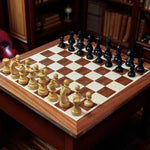
The best examples respect the features that made the original Staunton design so enduring: dignified king and queen profiles, distinctly carved knights, broad and stable bases, and pieces that remain easy to identify during a hard-fought game. Yet not every reproduction is intended for the same owner. The right choice depends on whether the set will be played regularly, displayed as a centrepiece, or given as a lasting gift.
Why the Jaques Pattern Still Matters
The Staunton pattern was introduced in the middle of the nineteenth century and is closely associated with Jaques of London. Its great achievement was practical rather than ornamental. Earlier chess sets could be highly decorative but difficult to read, particularly for anyone unfamiliar with a regional pattern. The Staunton design gave each piece a clear visual identity, allowing players to focus on the position rather than deciphering the men.
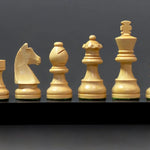
That clarity remains valuable. A rook should look like a rook from across the board; the bishop should be immediately recognisable by its mitre cut; the knight should have character without becoming so elaborate that it feels out of place beside the other pieces. A fine reproduction preserves this balance between expression and restraint.
It also carries a particular British heritage. The pattern has appeared in countless club rooms, private libraries and tournament halls, becoming the visual language of modern chess. Owning a reproduction is therefore about more than acquiring a handsome playing set. It is a connection to the form that shaped how chess is played and presented today.
What Defines a Good Jaques Chess Reproduction?
Historical inspiration alone does not guarantee quality. Reproductions vary considerably in timber selection, carving, finish and overall fidelity to the original design principles. The most satisfying sets feel coherent when viewed as a whole, rather than relying on one dramatic feature such as an oversized knight.
Proportion comes before decoration
Look first at the relationship between the king, queen, bishops and pawns. In a well-proportioned Jaques-inspired set, the king has authority without appearing top-heavy, and the queen complements its height and profile. Bishops should be slender enough to distinguish them from pawns, while the rook needs a substantial base that gives it visual weight on the board.
The knight is often the focal point. Hand-carved knights give each set individuality, with subtle differences in the curve of the neck, shaping of the ears and expression of the face. Such variation is part of handmade craftsmanship, not necessarily a flaw. However, both knights should still sit comfortably as a pair and match the formality of the remaining pieces.
A set can be ornate and still be unsuitable for regular play. Deep carving may be appealing in a display cabinet, but it can make pieces awkward to lift or visually busy during a game. Buyers planning frequent use may prefer a cleaner, more tournament-minded interpretation of the Jaques pattern.
Timber shapes character and longevity
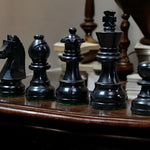
The wood used for chessmen affects colour, grain, weight and long-term appearance. Boxwood is a traditional choice for the light army because it has a fine, even grain and takes a polished finish beautifully. For the dark pieces, sheesham, ebony, acacia and ebonised boxwood can each create a different effect.
Sheesham has warm, natural brown tones and expressive grain, giving a traditional set a relaxed richness. Ebony provides the strongest contrast against boxwood and has a more formal, luxury appearance, although it requires careful seasoning and responsible selection due to its density and value. Ebonised pieces offer a deep black finish at a more accessible price point, but their surface finish deserves sensible care to avoid knocks and scratches.
Natural timber is not uniform, and it should not be expected to be. Grain, tone and small colour variations are evidence of the material rather than signs of inferior workmanship. What matters is that the wood has been properly dried, shaped and finished, with no obvious cracking, roughness or unstable joinery.
Weighting changes the playing experience
A Jaques-style set should feel planted. Weighted bases improve stability, give the pieces a reassuring presence and reduce the chance of a king or queen toppling when the game becomes animated. For most home and club players, a properly weighted set offers the best balance of comfort and durability.
Heavily weighted pieces can feel especially luxurious, but more weight is not automatically better. An excessively heavy set may be tiring to move over a long session and can mark a delicate board if handled carelessly. The important consideration is evenness: pieces should stand securely and feel consistent within their respective ranks.
Protective green or baize base pads are another small but significant detail. They allow the pieces to move smoothly and help preserve the playing surface. If a set is intended for polished wood, a high-quality pad is essential rather than decorative.
Pairing the Pieces With the Right Board
A handsome reproduction can lose much of its effect when paired with an incorrectly sized board. The square size must give every piece room to stand without crowding neighbouring squares. As a useful starting point, the king's base should occupy around 75 to 80 per cent of a square. This keeps the position readable and gives the set the generous, composed appearance associated with traditional chess.
For a king of around 3.75 inches, a board with 2 to 2.25 inch squares is often an excellent match. Larger kings may need 2.375 inch or 2.5 inch squares. These are guides rather than rigid rules, as a broad-based design needs more space than a slender pattern of the same height.
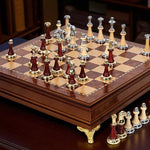
Board timber and colour deserve equal attention. A walnut and maple board offers warm contrast for brown and boxwood pieces, while black and maple creates the crisp, formal setting often chosen for ebony or ebonised sets. The border should support the chessmen rather than compete with them. Highly figured exotic woods can be striking, but a quieter board is often the better choice for a detailed knight set.
If the set will be used for competitive or club play, ensure the board dimensions and piece height align with the requirements of the venue or event. A reproduction can retain historical character while still being entirely practical for modern play.
Original Antique or Modern Reproduction?
An original nineteenth-century Jaques set has undeniable collector appeal, but it also brings questions of condition, completeness and provenance. Antique sets may have repaired collars, replacement pieces, worn knights or aged bases. These characteristics can be historically meaningful, yet they require knowledge and may make an original unsuitable for everyday use.
A quality modern reproduction offers a different kind of value. It allows the owner to enjoy the historic pattern as it was meant to be used, without worrying that a misplaced pawn or accidental knock will diminish an irreplaceable antique. It can also provide a matched set of pieces, a suitably proportioned board and the reassurance of contemporary quality control.
For a collector, the distinction should always be clear. A reproduction should be presented as historically inspired or reproduced from a recognised pattern, never confused with an antique original. Honest description protects the buyer and gives the modern set its proper merit: fine craftsmanship, usable heritage and long-term enjoyment.
Choosing for Play, Display or Gifting
For regular play, prioritise a durable hardwood set with reliable weighting, comfortable piece profiles and a board sized for clear movement. A traditional Jaques-inspired pattern is particularly well suited to players moving from a basic set to their first substantial wooden chess set.
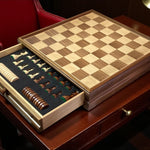
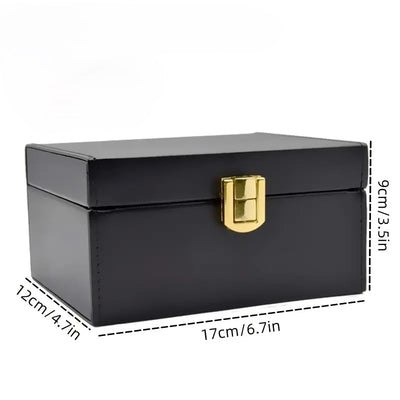
For display, the carving and timber may take precedence. A finely detailed knight, ebony and boxwood contrast, or a larger king can make a compelling feature in a study, sitting room or office. Storage remains important, however. A fitted case or properly partitioned box protects the pieces from dust, knocks and unnecessary light exposure.
As a gift, consider the recipient's likely relationship with chess. A beginner will appreciate a complete, well-matched set that is ready to use, while an experienced player may value a more distinctive historic pattern or premium timber combination. A Jaques chess reproduction is especially fitting for milestones because it has both immediate purpose and the character to be kept for decades.
Caring for a Traditional Wooden Set
Wooden chessmen need little complicated maintenance. Keep them away from strong sunlight, radiators and damp conditions, as sudden changes in temperature or humidity can affect natural timber. Dust with a soft, dry cloth and avoid household sprays, silicone polishes or excessive moisture.
After play, return the pieces to a case or storage box rather than leaving them exposed on a windowsill or in a busy household area. If the board is used frequently, lift pieces rather than dragging them, even when the bases are padded. These simple habits preserve the finish and help a quality set acquire the gentle, dignified character that only regular use can bring.
The finest reproduction is one that invites a game. Choose a pattern with history, materials you enjoy handling and proportions that suit its board, then allow it to become part of your own chess tradition.
Leave a comment